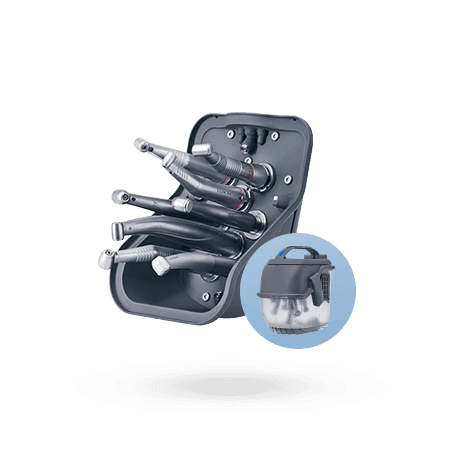
In every dental practice, there are instruments that carry a particularly high workload. Straight and contra-angle handpieces, turbines and other hollow instruments are used frequently in a wide range of clinical procedures and often need to be made available again within a busy treatment schedule. These instruments are expected to perform precisely, safely and reliably, whether they are used for restorative treatment, crown preparation, endodontic access, periodontal procedures, prophylaxis or surgical interventions.
For dental teams, handpiece reprocessing is closely linked to infection prevention, patient safety and quality management. Reusable instruments should be reprocessed in accordance with applicable local regulations, professional guidance and the manufacturer’s instructions for use. Depending on the instrument, intended use and local requirements, this may include cleaning, disinfection, lubrication, inspection, packaging, sterilisation, documentation and release for reuse.
For handpieces and contra-angles, there is also another important consideration: instrument protection. A well-maintained handpiece supports smooth operation, clinical precision and reliable treatment workflows. Inadequate care may contribute to increased noise, reduced performance, overheating, internal contamination or premature mechanical wear. Over time, this can lead to higher repair costs, increased downtime and greater pressure on instrument availability. Handpiece reprocessing is therefore not only an infection-prevention topic. It is also relevant to instrument performance, workflow efficiency, cost control and patient safety.
Why contra-angles deserve special attention
A contra-angle handpiece may appear compact and robust from the outside, but internally it is a precision-engineered instrument. Gear systems, bearings, chuck mechanisms and internal channels operate under significant mechanical and thermal stress.
During clinical use, handpieces can be exposed to friction, heat, aerosols, debris and mechanical load. Demanding procedures, including the preparation of hard restorative materials, can place additional strain on internal components. This helps explain why cleaning, reprocessing and lubrication should be regarded as routine parts of instrument care rather than occasional maintenance measures.
The same applies to the chuck system. While external cleanliness is easy to observe, the internal bur-retention mechanism is equally important for safe and reliable function. If the chuck does not hold the rotary instrument securely, both clinical precision and safety may be affected. Where specified by the manufacturer, regular chuck care should therefore form part of the maintenance routine.
Instrument service life is influenced by many factors, including frequency of use, clinical application, handling, reprocessing procedures, lubrication, storage and accidental damage. Consistent daily care can help reduce avoidable wear and support reliable long-term performance.
The hidden cost of inadequate care
A handpiece that fails during treatment can disrupt the clinical procedure, place additional pressure on the dental team and affect the patient experience.
If only a limited number of instruments are available, one failed handpiece can also create challenges for instrument turnaround and appointment scheduling. Repeated repairs and premature replacement can generate significant costs over time. Insufficient or incorrect lubrication may contribute to problems such as increased wear of bearings and gears, reduced torque transmission, impaired bur retention, corrosion, increased noise and shorter service life. Contamination or residues may also accumulate in internal channels if cleaning is inadequate.
These problems do not always appear suddenly. An instrument may continue to function while gradually becoming noisier, rougher or less efficient. A preventive approach is therefore preferable to a purely reactive one. The aim is to establish a reliable reprocessing routine that protects instruments after each use and identifies deterioration before it results in failure.
Cleaning and lubrication are not the same thing
A common misunderstanding in handpiece care is that lubrication alone is sufficient. Lubrication is important, but it does not replace cleaning and disinfection. If an instrument is repeatedly lubricated without adequate cleaning, contaminants and residues may remain inside the instrument and can contribute to deposits or functional impairment. The opposite situation can also occur. A handpiece may be thoroughly cleaned and disinfected but not lubricated afterwards.
Some automated cleaning and disinfection processes remove lubricants from internal components. Where required by the instrument manufacturer, lubrication should therefore be performed again after cleaning and disinfection and before subsequent processing steps. The correct sequence depends on the instrument, the reprocessing equipment used, local requirements and the manufacturer’s instructions for use.
A typical workflow may include:
removal of gross contamination
safe transport to the reprocessing area
cleaning, disinfection
inspection
lubrication and chuck care where required
packaging where applicable
sterilisation where required
documentation and release
appropriate storage before reuse
No individual step can compensate for a failure elsewhere in the process. Sterilisation does not replace effective cleaning, lubrication does not remove contamination, and documentation does not replace inspection. Reliable reprocessing depends on the entire process chain.
The importance of suitable care oil
Not all lubricants are suitable for dental transmission instruments. Handpieces should be maintained using care products approved or recommended for the specific instrument and compatible with the subsequent reprocessing process. Where steam sterilisation is required, the lubricant should also be suitable for the temperatures and process conditions involved. Unsuitable products may leave residues, become sticky under repeated thermal exposure or interfere with instrument function.
The manufacturer’s instructions for use should therefore determine:
which lubricant may be used
how much should be applied
where it should be applied
how often lubrication is required
whether lubrication is necessary before sterilisation
The objective is not simply to apply oil, but to deliver the correct care product in the correct quantity to the relevant internal areas of the instrument.
The handpiece reprocessing cycle in practice
A practical reprocessing workflow begins immediately after treatment. Visible contamination should be removed as soon as reasonably possible in accordance with the instrument manufacturer’s instructions and the practice’s infection-prevention procedures. Allowing blood, dental materials, medicaments or other residues to dry can make subsequent cleaning more difficult. Used instruments should then be transported safely to the designated reprocessing area using suitable containment methods that comply with local requirements.
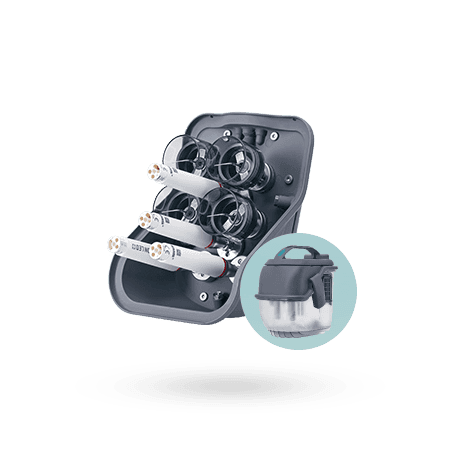
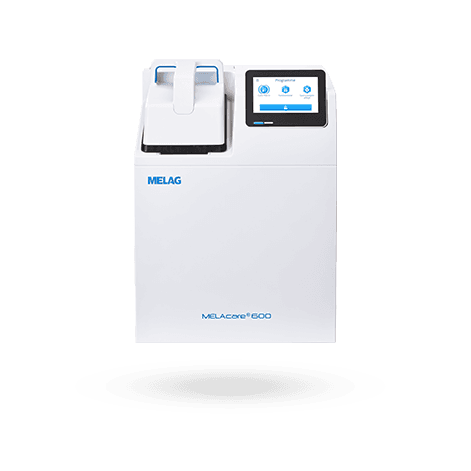
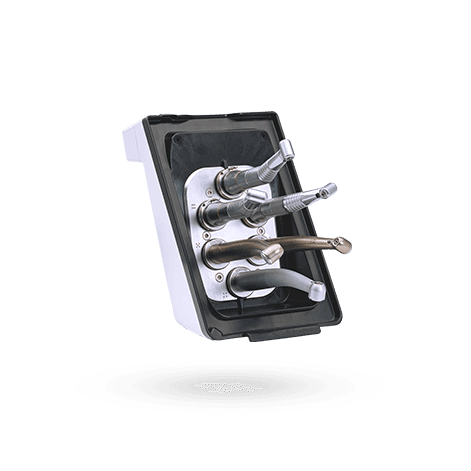
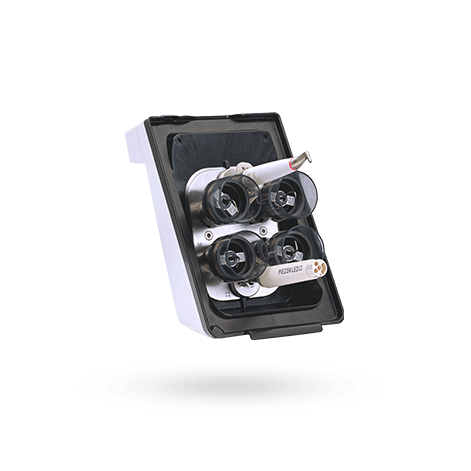
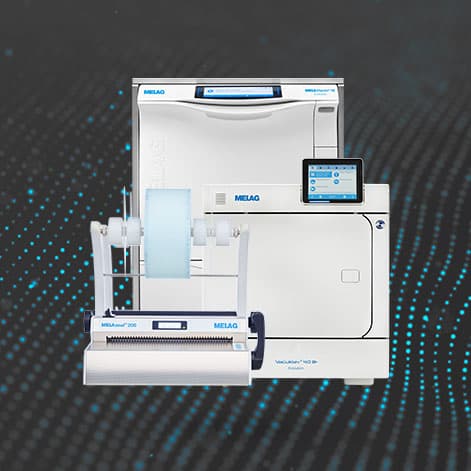
Automated cleaning and disinfection are often preferred where compatible equipment and validated processes are available, because they can improve repeatability and reduce dependence on manual technique. Depending on the practice setup, this may involve a washer-disinfector or a dedicated handpiece reprocessing system. After cleaning and disinfection, instruments should be inspected.
Inspection may help identify:
visible contamination
damage, corrosion, discoloration
blocked channels
defective components
other signs of deterioration
Magnification can be useful for this purpose. Damaged or questionable instruments should be removed from clinical circulation until they have been assessed, repaired or replaced. For handpieces and contra-angles, the next stage may include lubrication of internal components and care of the chuck mechanism where specified by the manufacturer. The instrument can then proceed to packaging and sterilisation where required by its intended use, classification, local regulations or professional guidance. Appropriate documentation and release procedures should complete the process before the instrument is returned to storage or clinical use.