XXL Washer-Disinfector: Discover MELAtherm 20 >

Products Service Discover Contact
  • System Solution
  • Bestsellers Australia
  • Autoclaves
  • Large Autoclaves
  • Small autoclaves
  • MELAcare
  • Washer-Disinfectors
  • Ultrasonic cleaners
  • Sealing Devices
  • Packaging
  • Documentation
  • MELAverse
  • Care
  • Water Treatment
  • Routine Testing
  • Consumables
  • Bestsellers Australia
    Bestsellers Australia
  • Autoclaves
    Autoclaves
  • Large Autoclaves
    Large Autoclaves
  • Small autoclaves
    Small autoclaves
  • MELAcare
    MELAcare
  • Washer-Disinfectors
    Washer-Disinfectors
  • Ultrasonic cleaners
    Ultrasonic cleaners
  • Sealing Devices
    Sealing Devices
  • Packaging
    Packaging
  • Documentation
    Documentation
  • MELAverse
    MELAverse
  • Care
    Care
  • Water Treatment
    Water Treatment
  • Routine Testing
    Routine Testing
  • Consumables
    Consumables
Bestsellers Australia
  • Premium Class
    Premium Class
  • Prime Line (Class B)
    Prime Line (Class B)
  • Pro Line (Class B)
    Pro Line (Class B)
  • Pro Line (Class S)
    Pro Line (Class S)
  • Vacuclave 105 / 305
    Vacuclave 105 / 305
  • Vacuclave 550
    Vacuclave 550
  • Cliniclave 45 Series
    Cliniclave 45 Series
  • Vacuklav 24 BL+
    Vacuklav 24 BL+
  • Accessories & components for autoclaves
    Accessories & components for autoclaves
  • Cliniclave 45
    Cliniclave 45
  • Cliniclave 45 M
    Cliniclave 45 M
  • Cliniclave 45 D
    Cliniclave 45 D
  • Cliniclave 45 MD
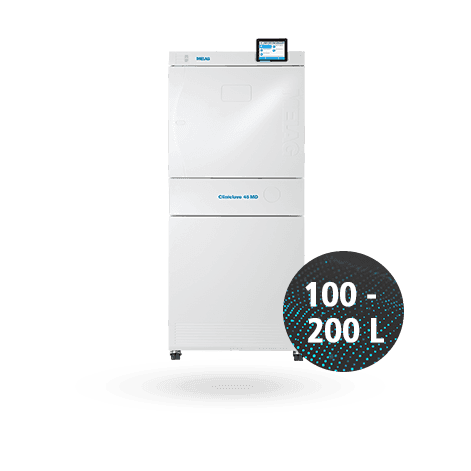
    Cliniclave 45 MD
  • Vacuclave 550
    Vacuclave 550
  • Accessories & components for large autoclaves
    Accessories & components for large autoclaves
  • Vacuclave 105
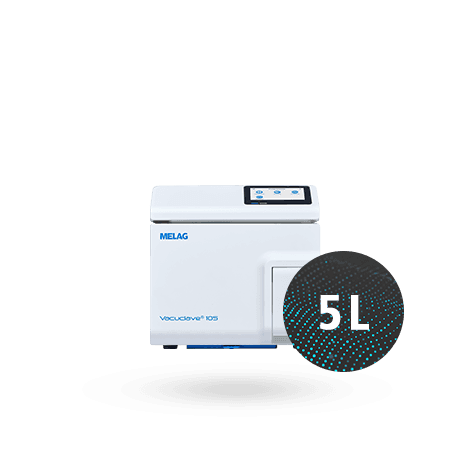
    Vacuclave 105
  • Vacuclave 305
    Vacuclave 305
  • MELAcare
    MELAcare
  • MELAcare Lid Blue
    MELAcare Lid Blue
  • MELAcare Lid Green
    MELAcare Lid Green
  • Care Oil
    Care Oil
  • Accessories & components for MELAcare
    Accessories & components for MELAcare
  • MELAtherm 20
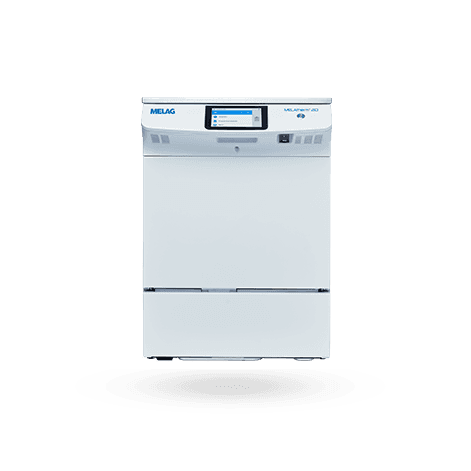
    MELAtherm 20
  • MELAtherm 10 Evolution
    MELAtherm 10 Evolution
  • Ultrasonic cleaners
    Ultrasonic cleaners
  • Loading patterns
    Loading patterns
  • Baskets & Adapters
    Baskets & Adapters
  • MELAcontrol Wash Check
    MELAcontrol Wash Check
  • Regenerating Salt
    Regenerating Salt
  • Accessories & components for thermal disinfectors
    Accessories & components for thermal disinfectors
Ultrasonic cleaners
Ultrasonic cleaners
  • MELAseal 300
    MELAseal 300
  • MELAseal 200
    MELAseal 200
  • MELAseal 100+
    MELAseal 100+
  • Routine Testing
    Routine Testing
  • Accessories & components for sealing devices
    Accessories & components for sealing devices
  • MELAstore Trays
    MELAstore Trays
  • MELAstore Tray Ophthalmology
    MELAstore Tray Ophthalmology
  • MELAstore Boxes
    MELAstore Boxes
  • MELAstore transport box
    MELAstore transport box
  • Accessories & components for sterile goods storage
    Accessories & components for sterile goods storage
  • MELAtrace
    MELAtrace
  • MELAverse
    MELAverse
  • MELAprint 80
    MELAprint 80
  • MELAprint 60
    MELAprint 60
  • MELAdoc
    MELAdoc
  • MELAflash
    MELAflash
  • MELAnet Box
    MELAnet Box
  • Accessories & components for documentation
    Accessories & components for documentation
MELAverse
MELAverse
  • Care Oil Spray
    Care Oil Spray
  • Chamber Protect
    Chamber Protect
  • MELAdem 40
    MELAdem 40
  • MELAdem 47
    MELAdem 47
  • MELAdem 53
    MELAdem 53
  • MELAdem 53 C
    MELAdem 53 C
  • MELAdem 56
    MELAdem 56
  • MELAjet
    MELAjet
  • Accessories & components for water treatment
    Accessories & components for water treatment
  • MELAcontrol Wash Check
    MELAcontrol Wash Check
  • MELAcontrol Seal Check
    MELAcontrol Seal Check
  • MELAcontrol Ink Test
    MELAcontrol Ink Test
Consumables
Consumables
  • MELAG Service World
  • Downloadcenter
  • Troubleshooting
  • Video Tutorials
  • Device Registration
  • Service Portal
  • Technical Training
  • Configurator
  • Downloadcenter
    Downloadcenter
  • Troubleshooting
    Troubleshooting
  • Video Tutorials
    Video Tutorials
  • Device Registration
    Device Registration
  • Service Portal
    Service Portal
  • Technical Training
    Technical Training
  • Configurator
    Configurator
Downloadcenter
Downloadcenter
Troubleshooting
Troubleshooting
  • MELAcare Tutorials
    MELAcare Tutorials
  • Careclave Tutorials
    Careclave Tutorials
  • Autoclaves Tutorials
    Autoclaves Tutorials
  • Washer-Disinfector Tutorials
    Washer-Disinfector Tutorials
  • MELAseal 200 Tutorials
    MELAseal 200 Tutorials
  • MELAseal 300 Tutorials
    MELAseal 300 Tutorials
  • MELAtrace Tutorials
    MELAtrace Tutorials
Device Registration
Device Registration
Service Portal
Service Portal
Technical Training
Technical Training
Configurator
Configurator
  • Promotions
    Promotions
  • Success Stories
    Success Stories
  • Inspiration & Tips
    Inspiration & Tips
  • News
    News
  • Family Business & Jobs
    Family Business & Jobs
Promotions
Promotions
Success Stories
Success Stories
Inspiration & Tips
Inspiration & Tips
News
News
Family Business & Jobs
  • Book a consultation: On-site, online or in a showroom
    Book a consultation: On-site, online or in a showroom
  • Your sales contacts
    Your sales contacts
  • Fairs & Congresses
    Fairs & Congresses
  • Contact form
    Contact form
  • Company & Apprenticeship
    Company & Apprenticeship
Book a consultation: On-site, online or in a showroom
Your sales contacts
Your sales contacts
Fairs & Congresses
Fairs & Congresses
Contact form
Contact form
Company & Apprenticeship
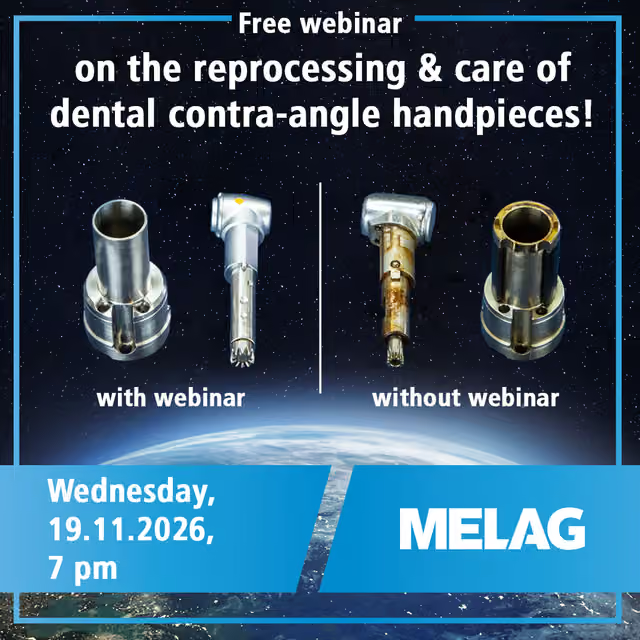
Free Webinar: For more hygiene, better instrument protection & clear workflows
Learn more
Identify errors, find solutions: Our Troubleshooting Portal for MELAG products
Start troubleshooting
Free Webinar: For more hygiene, better instrument protection & clear workflows
Learn more
Any questions? We have the answers! Our hygiene experts in Australia will be happy to advise you.
Contact us now
|
Specialties
  • Dental
  • Medical
  • Ophthalmo
  • Hospital
  • Veterinary
  • Podiatry
  • University
Select language and country

Newsletter Subscription

Register for our newsletter and always stay up to date.

Products
  • Instrument Reprocessing
  • Autoclaves
  • MELAcare
  • Washer-Disinfectors
  • Ultrasonic cleaners
  • Sealing Devices
Service
  • Downloads
  • Troubleshooting
  • Video Tutorials
  • Blog
Company
  • We are MELAG
  • Sustainability
  • History
  • News
  • Contact
  • Instrument Reprocessing
  • Autoclaves
  • MELAcare
  • Washer-Disinfectors
  • Ultrasonic cleaners
  • Sealing Devices
  • Downloads
  • Troubleshooting
  • Video Tutorials
  • Blog
  • We are MELAG
  • Sustainability
  • History
  • News
  • Contact
  • Imprint
  • Terms and Conditions
  • Privacy
  • Whistleblower
  • Open Cookie Settings

© MELAG Medizintechnik GmbH & Co. KG

Placeholder for alt text

Why Handpiece and Contra-Angle Reprocessing Matters in Dental Practices

Learn More

In every dental practice, there are instruments that carry a particularly high workload. Straight and contra-angle handpieces, turbines and other hollow instruments are used frequently in a wide range of clinical procedures and often need to be made available again within a busy treatment schedule. These instruments are expected to perform precisely, safely and reliably, whether they are used for restorative treatment, crown preparation, endodontic access, periodontal procedures, prophylaxis or surgical interventions.

For dental teams, handpiece reprocessing is closely linked to infection prevention, patient safety and quality management. Reusable instruments should be reprocessed in accordance with applicable local regulations, professional guidance and the manufacturer’s instructions for use. Depending on the instrument, intended use and local requirements, this may include cleaning, disinfection, lubrication, inspection, packaging, sterilisation, documentation and release for reuse.

For handpieces and contra-angles, there is also another important consideration: instrument protection. A well-maintained handpiece supports smooth operation, clinical precision and reliable treatment workflows. Inadequate care may contribute to increased noise, reduced performance, overheating, internal contamination or premature mechanical wear. Over time, this can lead to higher repair costs, increased downtime and greater pressure on instrument availability. Handpiece reprocessing is therefore not only an infection-prevention topic. It is also relevant to instrument performance, workflow efficiency, cost control and patient safety.

Why contra-angles deserve special attention

A contra-angle handpiece may appear compact and robust from the outside, but internally it is a precision-engineered instrument. Gear systems, bearings, chuck mechanisms and internal channels operate under significant mechanical and thermal stress.

During clinical use, handpieces can be exposed to friction, heat, aerosols, debris and mechanical load. Demanding procedures, including the preparation of hard restorative materials, can place additional strain on internal components. This helps explain why cleaning, reprocessing and lubrication should be regarded as routine parts of instrument care rather than occasional maintenance measures.

The same applies to the chuck system. While external cleanliness is easy to observe, the internal bur-retention mechanism is equally important for safe and reliable function. If the chuck does not hold the rotary instrument securely, both clinical precision and safety may be affected. Where specified by the manufacturer, regular chuck care should therefore form part of the maintenance routine.

Instrument service life is influenced by many factors, including frequency of use, clinical application, handling, reprocessing procedures, lubrication, storage and accidental damage. Consistent daily care can help reduce avoidable wear and support reliable long-term performance.

The hidden cost of inadequate care

A handpiece that fails during treatment can disrupt the clinical procedure, place additional pressure on the dental team and affect the patient experience.

If only a limited number of instruments are available, one failed handpiece can also create challenges for instrument turnaround and appointment scheduling. Repeated repairs and premature replacement can generate significant costs over time. Insufficient or incorrect lubrication may contribute to problems such as increased wear of bearings and gears, reduced torque transmission, impaired bur retention, corrosion, increased noise and shorter service life. Contamination or residues may also accumulate in internal channels if cleaning is inadequate.

These problems do not always appear suddenly. An instrument may continue to function while gradually becoming noisier, rougher or less efficient. A preventive approach is therefore preferable to a purely reactive one. The aim is to establish a reliable reprocessing routine that protects instruments after each use and identifies deterioration before it results in failure.

Cleaning and lubrication are not the same thing

A common misunderstanding in handpiece care is that lubrication alone is sufficient. Lubrication is important, but it does not replace cleaning and disinfection. If an instrument is repeatedly lubricated without adequate cleaning, contaminants and residues may remain inside the instrument and can contribute to deposits or functional impairment. The opposite situation can also occur. A handpiece may be thoroughly cleaned and disinfected but not lubricated afterwards.

Some automated cleaning and disinfection processes remove lubricants from internal components. Where required by the instrument manufacturer, lubrication should therefore be performed again after cleaning and disinfection and before subsequent processing steps. The correct sequence depends on the instrument, the reprocessing equipment used, local requirements and the manufacturer’s instructions for use.

A typical workflow may include:

  • removal of gross contamination

  • safe transport to the reprocessing area

  • cleaning, disinfection

  • inspection

  • lubrication and chuck care where required

  • packaging where applicable

  • sterilisation where required

  • documentation and release

  • appropriate storage before reuse

No individual step can compensate for a failure elsewhere in the process. Sterilisation does not replace effective cleaning, lubrication does not remove contamination, and documentation does not replace inspection. Reliable reprocessing depends on the entire process chain.

The importance of suitable care oil

Not all lubricants are suitable for dental transmission instruments. Handpieces should be maintained using care products approved or recommended for the specific instrument and compatible with the subsequent reprocessing process. Where steam sterilisation is required, the lubricant should also be suitable for the temperatures and process conditions involved. Unsuitable products may leave residues, become sticky under repeated thermal exposure or interfere with instrument function.

The manufacturer’s instructions for use should therefore determine:

  • which lubricant may be used

  • how much should be applied

  • where it should be applied

  • how often lubrication is required

  • whether lubrication is necessary before sterilisation

The objective is not simply to apply oil, but to deliver the correct care product in the correct quantity to the relevant internal areas of the instrument.

The handpiece reprocessing cycle in practice

A practical reprocessing workflow begins immediately after treatment. Visible contamination should be removed as soon as reasonably possible in accordance with the instrument manufacturer’s instructions and the practice’s infection-prevention procedures. Allowing blood, dental materials, medicaments or other residues to dry can make subsequent cleaning more difficult. Used instruments should then be transported safely to the designated reprocessing area using suitable containment methods that comply with local requirements.

Automated cleaning and disinfection are often preferred where compatible equipment and validated processes are available, because they can improve repeatability and reduce dependence on manual technique. Depending on the practice setup, this may involve a washer-disinfector or a dedicated handpiece reprocessing system. After cleaning and disinfection, instruments should be inspected.

Inspection may help identify:

  • visible contamination

  • damage, corrosion, discoloration

  • blocked channels

  • defective components

  • other signs of deterioration

Magnification can be useful for this purpose. Damaged or questionable instruments should be removed from clinical circulation until they have been assessed, repaired or replaced. For handpieces and contra-angles, the next stage may include lubrication of internal components and care of the chuck mechanism where specified by the manufacturer. The instrument can then proceed to packaging and sterilisation where required by its intended use, classification, local regulations or professional guidance. Appropriate documentation and release procedures should complete the process before the instrument is returned to storage or clinical use.

Workflow pressure in dental practices

Dental practices worldwide face similar operational challenges: maintaining patient safety while balancing time, space, staffing and cost. Instrument turnaround needs to be fast enough to support clinical activity but controlled enough to meet applicable infection-prevention and quality-management requirements. Traditional workflows can create bottlenecks.

One option is to process compatible handpieces in a washer-disinfector using appropriate connections or injector systems. This can support standardisation and reduce manual cleaning, although cycle duration and subsequent care requirements may influence instrument availability. If the cleaning and disinfection process removes lubrication from internal components, the handpieces may still require a separate lubrication step afterwards.

Another option is a dedicated reprocessing and care unit for dental handpieces and other compatible hollow instruments. Such systems may combine several routine steps and help shorten turnaround times. However, the practical value of any system depends on how well it fits the practice’s existing workflow, space, instrument volume and equipment. A further option is a highly integrated system combining several stages of reprocessing within one device. There is no universally ideal configuration.

The most appropriate solution depends on factors such as:

  • instrument type and classification

  • number of instruments processed each day

  • treatment profile

  • room layout

  • existing sterilisation equipment

  • staffing

  • required turnaround time

  • local regulatory requirements

  • manufacturer instructions

  • documentation needs

The most suitable system is therefore not necessarily the largest or most comprehensive one. It is the system that integrates reliably into the practice’s overall reprocessing concept.

What an effective handpiece reprocessing solution should achieve

Before considering a specific device, it is useful to define the key objectives of a handpiece reprocessing solution. It should support effective cleaning of internal and external surfaces and it should provide reliable disinfection within its validated process.

Where required, it should deliver consistent lubrication to the internal components of rotating instruments. It should support chuck care where this is specified by the manufacturer. Additionally, it should also be sufficiently efficient to avoid unnecessary bottlenecks while reducing repetitive manual tasks for the dental team.

Other important factors include:

  • instrument compatibility

  • reproducible process quality

  • ease of operation

  • documentation and traceability

  • compact installation

  • economical routine use

  • gentle treatment of valuable instruments

  • integration into the existing reprocessing workflow

Automation can help reduce process variation caused by differences in individual technique, time pressure or staff experience. However, automation does not remove the need for appropriate training.

Dental teams still need to:

  • classify instruments correctly

  • check compatibility

  • load devices correctly

  • inspect instruments after reprocessing

  • perform additional steps where required

  • release processed instruments according to local procedures

  • follow the relevant manufacturer instructions

Dental Product World

Best made even better: Vacuklav 40 - 44 B+ Evolution

The Evolution Series is faster than ever before. And so are you: Sterilise at double speed in just 8 min. with the Quick Program thanks to the patented Double Jacket Technology.

Enter Dental Product World
2018-12-18 JG 626 opt
Time to CARE

MELAcare - Cleaning, Disinfection, and Maintenance for Optimal Instrument and Patient Safety

The RKI-compliant reprocessing of handpieces and contra-angles poses particular challenges for dental universities due to the large number of instruments, rotating users, and tightly scheduled treatment courses.

In addition to reliable cleaning and disinfection, preserving the value of these sensitive instruments also plays a crucial role. With MELAcare, handpieces and contra-angles can be systematically cleaned, disinfected, and, if necessary, maintained: ensuring maximum patient safety, more efficient workflows, and instruments that are always ready for use in both teaching and clinical settings.

Register for the MELAcare Webinar
Design ohne Titel (94)

MELAcare as a dedicated handpiece reprocessing solution

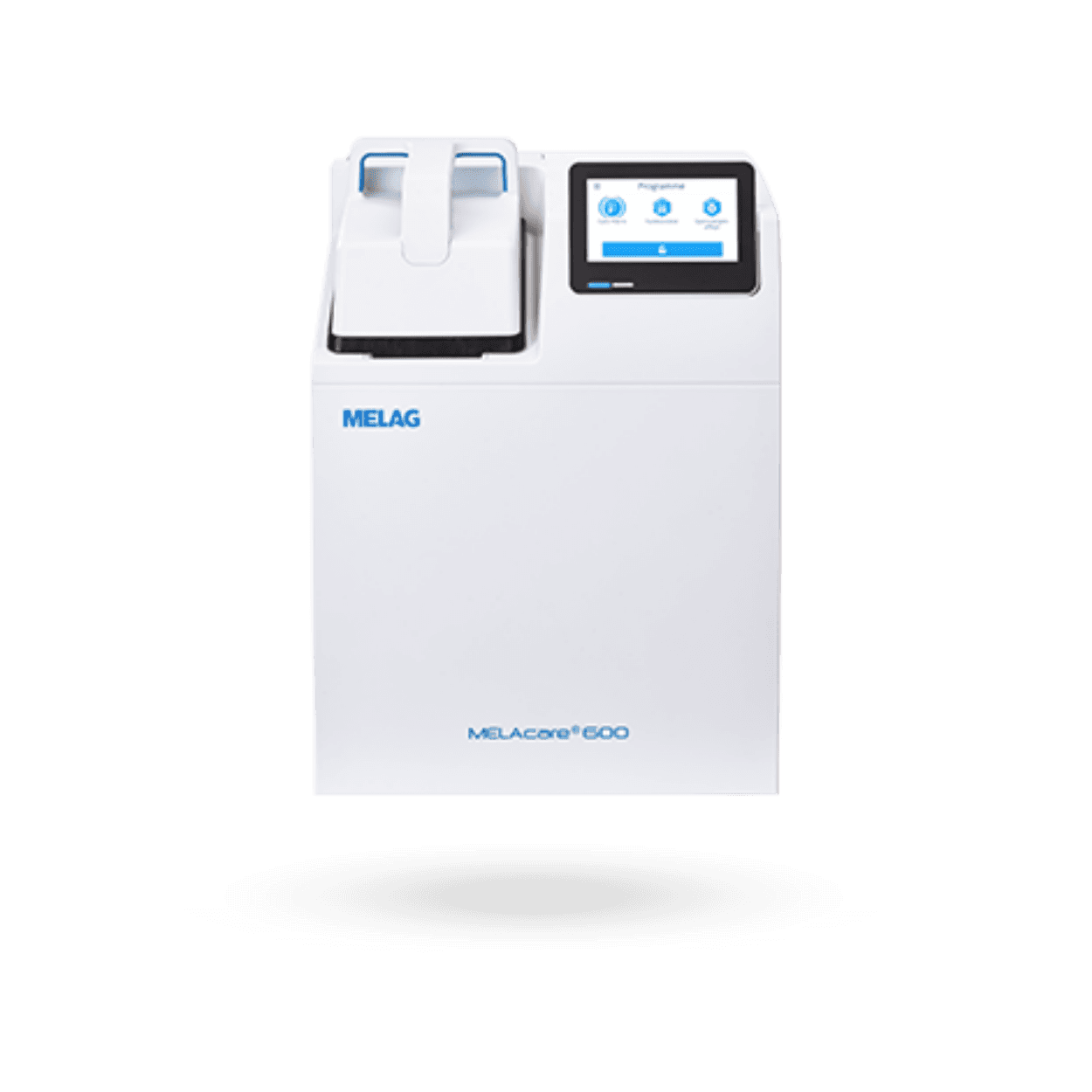
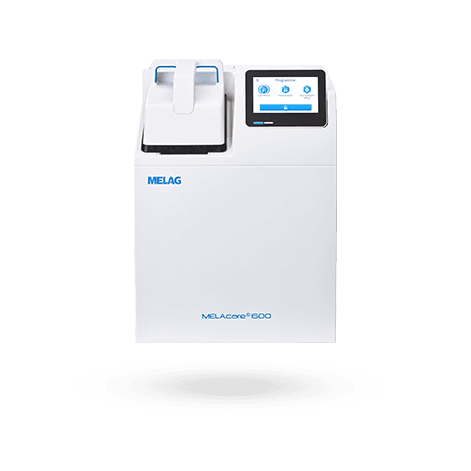
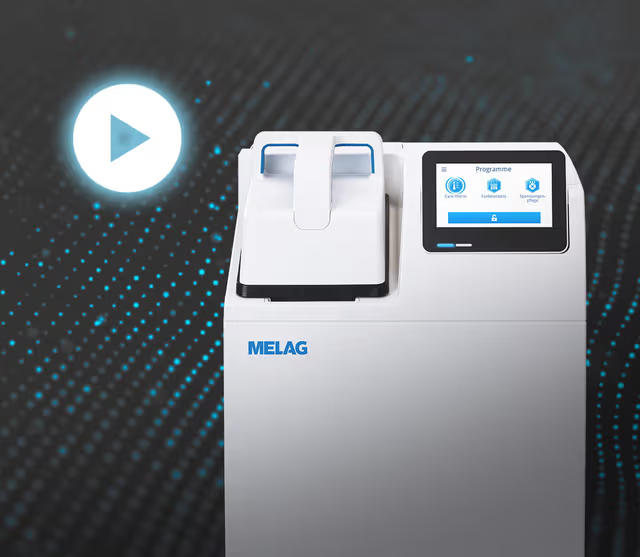
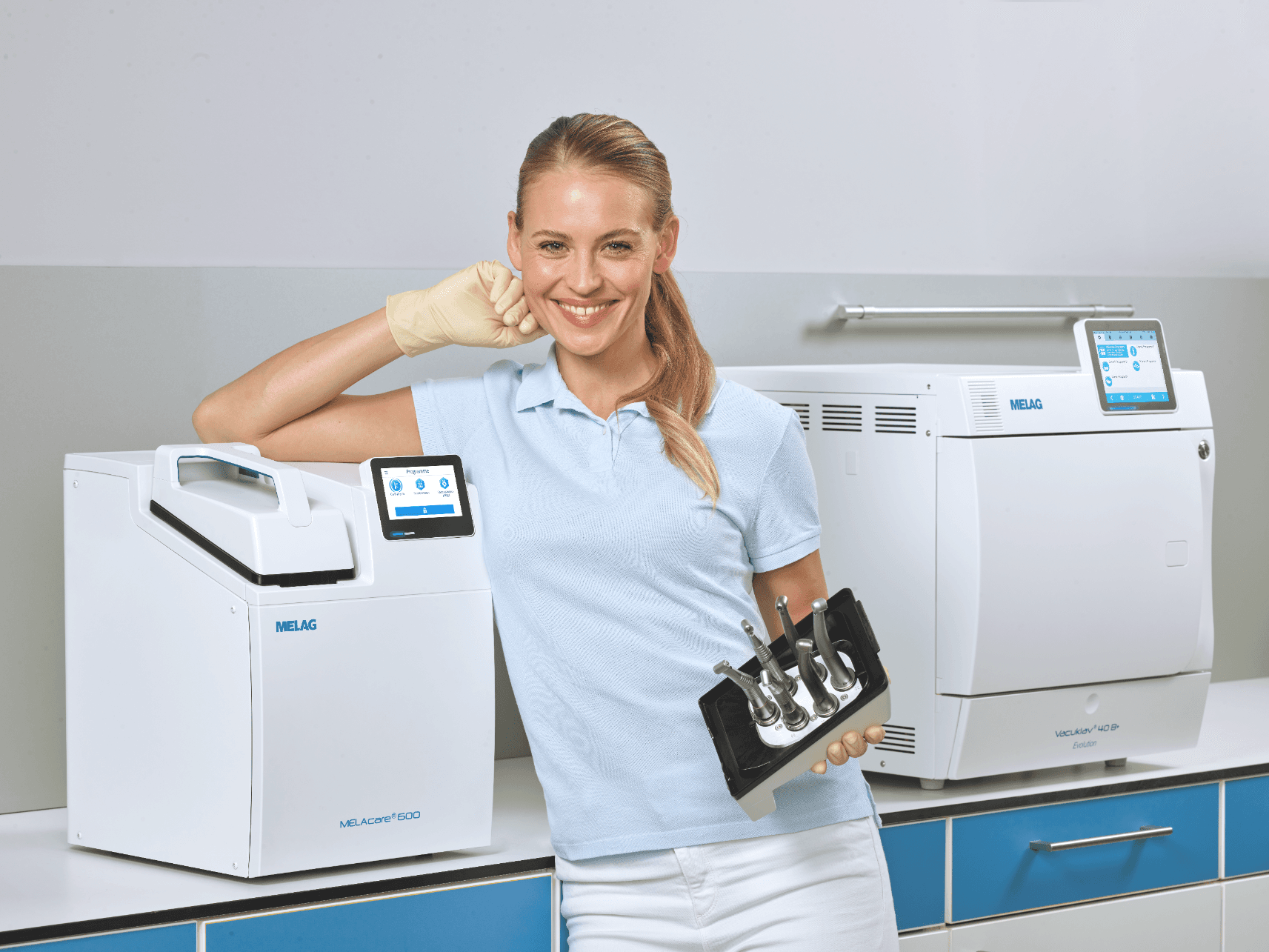
MELAcare has been developed for the automated cleaning, thermal disinfection and care of compatible dental hollow instruments. The system is intended to support dental practices in performing recurring reprocessing steps in a controlled and reproducible manner. It does not replace professional judgement, local infection-prevention policies, instrument classification or the manufacturer’s instructions for use. In routine operation, compatible instruments are connected to the appropriate lid, the programme is selected and the system performs the defined cleaning and disinfection process. Depending on the configuration and instrument type, lubrication is also integrated.

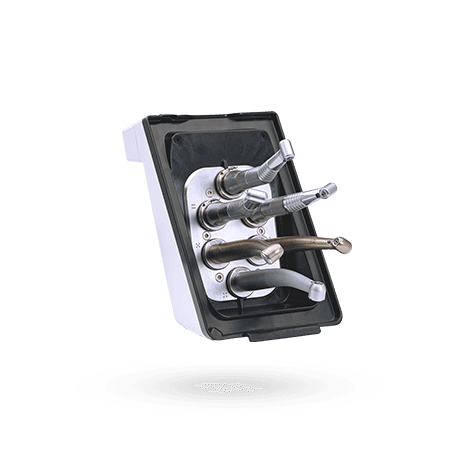
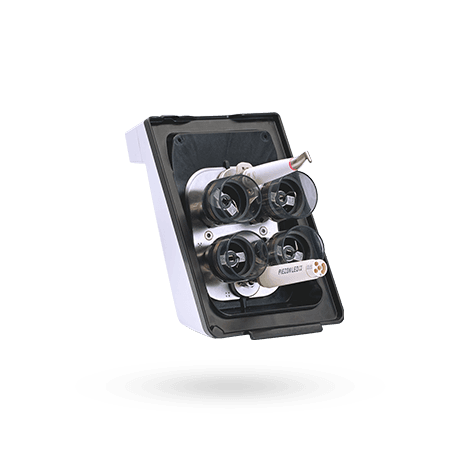
The MELAcare Lid Blue is designed for compatible handpieces and turbines requiring cleaning, disinfection and oil care. The MELAcare Lid Green is intended for compatible instruments such as certain ultrasonic scaler tips or prophylaxis handpieces that require cleaning and disinfection but no lubrication.

This distinction reflects an important principle of dental reprocessing: not all instruments require the same treatment. According to the product specifications, process times can start at approximately 14 minutes, depending on the selected programme and configuration. Shorter, reproducible processing cycles may help practices improve instrument availability and reduce the number of duplicate instruments required for daily clinical activity.

How the MELAcare process works

The MELAcare process combines several defined stages.

1. Cleaning

Cleaning is performed using ULTRAflow Technology, which uses compressed-air-assisted demineralised water to clean compatible instruments internally and externally. According to the system concept, the process is performed without cleaning or disinfection chemicals.

2. Thermal disinfection

Thermal disinfection follows the cleaning stage. According to the product specifications, the process operates at approximately 95 °C and achieves an A0 value of 3,000. The suitability of the process for a specific instrument must always be assessed according to the instrument manufacturer’s instructions, local requirements and the intended clinical use.
3. Lubrication

When the MELAcare Lid Blue is used, care oil is supplied to the internal gear channels of compatible rotating instruments. The objective is controlled and consistent lubrication rather than manual application that may vary between operators. The dedicated care oil is dosed automatically through the system.

4. Drying and cooling

After processing, internal channels are treated with compressed air to support drying. Pre-cooling helps prepare instruments for subsequent handling and further processing. Whether an instrument can be reused directly or must undergo additional packaging and sterilisation depends on its intended use, classification and applicable local requirements.

Documentation and release

Traceability is an important part of modern instrument reprocessing. Depending on local regulations and the practice’s quality-management system, documentation may need to demonstrate:

  • which process was performed

  • when the process took place

  • which programme was used

  • whether the cycle was completed successfully

  • who reviewed or released the processed instrument

MELAcare supports process documentation and batch release directly via the device interface. The ProControl concept enables user identification and approval, while process records can be transferred through available digital interfaces. Integrated documentation can help reduce manual administrative steps and support a more consistent quality-management process. The exact documentation requirements should always be aligned with local legislation, professional guidance and the practice’s own quality procedures.

Protecting chuck mechanisms and reducing avoidable repairs

The chuck mechanism is a critical functional component of many dental handpieces. Inadequate chuck care may contribute to poor bur retention, reduced precision or premature wear. Where chuck lubrication is specified by the instrument manufacturer, integrating this step into the routine reprocessing workflow can help ensure that it is performed consistently. The ADDcare station is designed to support chuck lubrication as part of the MELAcare workflow. Consistent care may help protect valuable instruments, reduce avoidable service requirements and support reliable clinical operation.

Space, time and instrument availability

Space is an important consideration in many dental reprocessing areas. Practices may already operate sterilizers, washer-disinfectors, sealing devices, water-treatment equipment, documentation systems and storage facilities within a limited footprint. A new device is therefore most useful when it addresses a clearly defined workflow need. A compact standalone reprocessing unit can be particularly relevant for practices that already have suitable sterilisation equipment and are looking to improve the cleaning, disinfection and care of compatible hollow instruments without replacing the entire reprocessing setup. According to the system specifications, MELAcare can process a high number of compatible instruments during a working day. Actual capacity in a practice will depend on programme selection, loading patterns, working hours, instrument types and the surrounding workflow.

Not a shortcut, but part of a structured reprocessing routine

A dedicated handpiece reprocessing system should not be regarded as a shortcut around established infection-prevention principles. It does not remove the need to:

  • classify instruments correctly

  • inspect them after processing

  • follow manufacturer instructions

  • train staf

  • maintain validated processes

  • package instruments where required

  • sterilise instruments where required

  • document and release instruments appropriately

Instead, an automated system can provide a structured and reproducible method for performing routine cleaning, disinfection and care steps. For instruments used in non-surgical procedures, further processing requirements depend on the instrument classification, intended use, local guidance and manufacturer instructions. For instruments used in surgical or other applications requiring sterility, cleaning and disinfection may form part of the reprocessing pathway before packaging and sterilisation. The key advantages of automation are consistency, traceability and reduced dependence on manual technique.

Building a culture of handpiece care

Successful instrument reprocessing depends not only on equipment, but also on the knowledge and behaviour of the dental team. Handpiece care should be understood as part of clinical quality rather than as an isolated technical task. Team members should understand:

  • why internal cleaning is important

  • why cleaning and disinfection should precede lubrication

  • when lubrication is required after automated cleaning

  • how to identify visible damage or corrosion

  • when an instrument must be removed from use

  • when packaging and sterilisation are required

  • how to document and release processed instruments

When the team understands the purpose behind each step, consistent implementation becomes easier. The connection between reprocessing, patient safety, instrument performance and practice efficiency becomes clear.

Conclusion: Handpiece and contra-angle care as part of clinical quality

Reliable handpiece care supports infection prevention, instrument performance, patient safety and efficient dental workflows. Automated cleaning, thermal disinfection, lubrication, chuck care and documentation can help make recurring reprocessing steps more consistent and easier to integrate into daily practice.

MELAcare is one example of a dedicated solution for compatible hollow dental instruments and can be integrated into a broader reprocessing workflow alongside suitable packaging, sterilisation and documentation processes. The appropriate workflow should always be determined by the instrument’s intended use, the manufacturer’s instructions, local regulatory requirements, professional guidance and the practice’s own quality-management procedures.

Looking for a compact, all-in-one solution for cleaning, disinfection, and care?

Upgrade your existing autoclave with MELAcare: This reprocessing and maintenance device for handpieces and contra-angles handles cleaning, disinfection, and—depending on the instrument—oil maintenance in just 14 minutes. This ensures your instruments are quickly ready for the next procedure.

Discover MELAcare
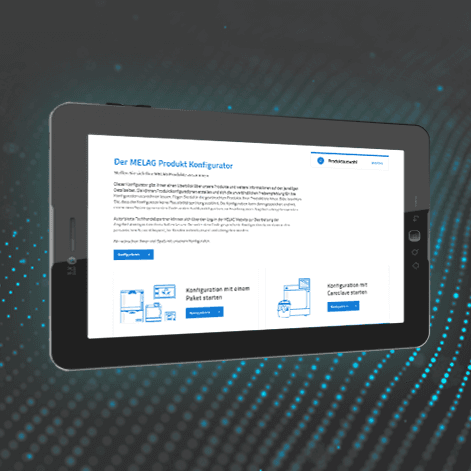
Configure Now
Design ohne Titel - 2026-08-07T142255.325