To play this video, please allow cookies and other external services from YouTube.

A pre-rinse phase with cold water is the first step to remove coarse soiling and proteins. The use of cold water for the pre-rinsing prevents coagulation of protein residues. The subsequent cleaning phase in the washer-disinfector is performed with an alkali-enzymatic cleaning agent and warm water.
MEtherm 51 is a high-performance mildly-alkaline cleaning agent for the removal of protein and fat residue for instrument reprocessing with MELAtherm 10 and MELAtherm 10 Evolution. The excellent cleaning performance of the material-friendly MEtherm 51 agent is achieved by an innovative combination of surfactants and enzymes. At the same time, this cleaning agent - tailored to the specific requirements of MELAtherm 10 and MELatherm 10 Evolution - prevents the development of residue on the instruments and the washing chamber.
The low pH value of a citric acid or phosphoric acid-based neutraliser equalises the alkalinity of the previous cleaning phase. The neutralisation and subsequent intermediate rinsing of the instruments in the washer-disinfector remove the remaining agents and make for the best-possible cleaning outcome.
The citric acid-based MEtherm 55 is an especially material-friendly neutraliser for use in a dental, ophthalmic and ophthalmic-surgery context. The phosphoric acid-based MEtherm 56 works reliably to remove acid-soluble deposits on instruments used in gynaecological, ENT, surgical practices and clinics. The neutralisers of the MEtherm series are effective in rotecting instruments and preventing the formation of residue.
After intermediate rinsing with clear water, the proper thermal disinfection of instruments is performed at 90 °C, including a holding time of 5 minutes. The combination of temperature and time enables achievement of the especially important A0 value of a minimum of 3.000 in the thermal disinfection. The A0 value represents a standard for the elimination of microorganisms during automated thermal instrument reprocessing.
All the programs of the MELAtherm 10 washer disinfector are designed to save resources and energy and to guarantee shortest operating times and the best cleaning outcomes. To ensure optimal drying results after cleaning and disinfection of instruments, the pH-neutral MEtherm 61 rinse aid is already added during heating phase.
Active exterior and interior drying protects the instruments against corrosion and damage. A HEPA filter is installed to remove microorganisms from the ambient air drawn into the washer disinfector for the drying of instruments. The instruments are thus dry and hand warm after the cleaning and disinfection procedure. The complexity of hollow body instruments with narrow lumen such as handpieces, turbines, endoscopes or ophthalmological instruments require additional manual drying in accordance with manufacturer's specifications.
Unlike many other washer disinfectors on the market MELAtherm 10 and MELAtherm 10 Evolution are equipped with automated drying at no extra cost. The active drying of the MELAG washer disinfectors ensures the value-retention of your instruments by preventing corrosion, damage and stain development.

To play this video, please allow cookies and other external services from YouTube.
A washer-disinfector, also known as a washer-disinfector, is an automated device for the automated reprocessing of medical devices. Its task is to clean, rinse, thermally disinfect and then dry instruments in a standardised manner - in a closed, controlled process.
In contrast to manual reprocessing, which can be error-prone and hygienically risky, a washer-disinfector works with reproducible, validatable programmes. This means that unsafe work steps such as manual brushing or disinfection are replaced by a standardised, documentable process. Thermal disinfection is carried out at a defined temperature over a certain period of time, which reliably reduces germs.
A washer-disinfector therefore makes a significant contribution to safety, quality and efficiency in instrument reprocessing: It protects staff from contamination, increases process reliability, standardises reprocessing and creates the conditions for subsequent successful sterilisation in an autoclave.
In addition to the advantages of mechanical cleaning and disinfection that have already been presented, the use of an automated cleaning and disinfection device (RDG) is also legally required. The legal obligation arises from the Medical Device Operator Ordinance in conjunction with the RKI recommendation. The following excerpts provide you with a brief overview of the key legal foundations:
Recommendation of the Commission for Hospital Hygiene and Infection Prevention (KRINKO) at the Robert Koch Institute (RKI) and the Federal Institute for Drugs and Medical Devices (BfArM) (Chapter 2.2.2 Cleaning, Disinfection, Flushing, and Drying): "Thermal processes in cleaning and disinfection devices (RDGs) are to be given priority over chemical and chemo-thermal disinfection methods due to their more reliable effectiveness."
The legal focus is particularly on the reprocessing of "critical B" medical devices. The complex instrument design and the sensitive field of application lead to the RKI fundamentally advocating for the mechanical reprocessing with a cleaning and disinfection device (RDG).
Furthermore, the use of a cleaning and disinfection device (RDG) for instrument reprocessing also fulfills the requirements for occupational safety. The technical rule for biological agents TRBA 250 emphasizes this demand:
"The disinfection and cleaning of instruments should preferably take place in the closed system of an automated device in order to minimize risks of injury and contamination and to protect employees from contact with the disinfectant. Prior repackaging of contaminated instruments should be avoided through organizational and technical measures."
The active drying of MELAtherm 10 and MELAtherm 10 Evolution guarantees that instruments are made available dry and hand-warm after cleaning and disinfection. The active drying protects your instruments against corrosion and damage. The additional rinse aid ensures stain-free drying processes of the instruments and the washing chamber.
Moreover, the active drying of a washer disinfector saves time and work. In comparison to devices without active drying, the instruments are directly available for further process steps of instrument decontamination. Hence, there is no need for subsequent manual drying
e.g. with a tissue. The dryness of the instruments is essential for the packaging process. Packaging in sterilization pouches requires dry instruments.
International hygiene guidelines recommend, that the final rinse and drying must be performed under conditions which prevent re-contamination of the disinfected instruments. In regard to that recommendation we suggest using medical compressed air for drying. The HEPA filter integrated in MELAtherm 10 and MELAtherm 10 Evolution fulfils this requirement and protects the instruments against re-contamination after cleaning and disinfection.
To ensure maximum process reliability and efficiency, the MELAG thermal disinfectors is equipped with the vital active drying at no extra cost.
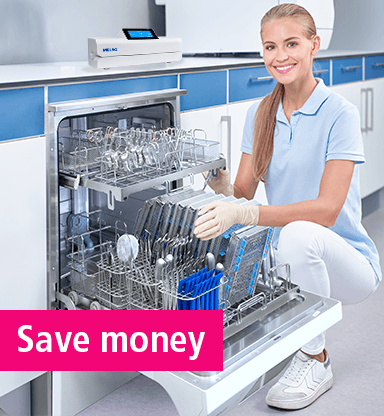
Purchase decisions rarely focus on the chamber size of the washer disinfector. Nevertheless, the choice of the correct decontamination chamber represents an important factor in instrument cleaning and disinfection. The practice-optimized treatment chamber of MELAtherm 10 and MELatherm 10 Evolution ensures quick operating times in combination with low consumption. The MELAG thermal disinfectors generate a cost per cycle of just 1,10 € (for power, water and process agents).
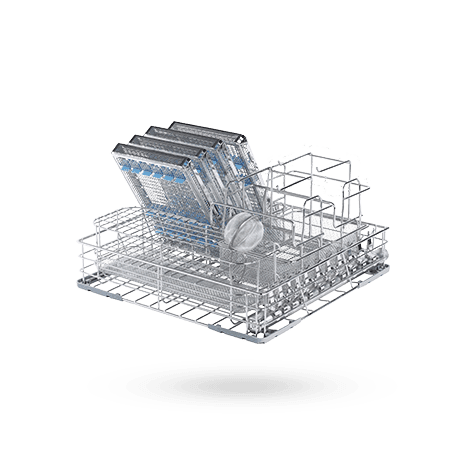
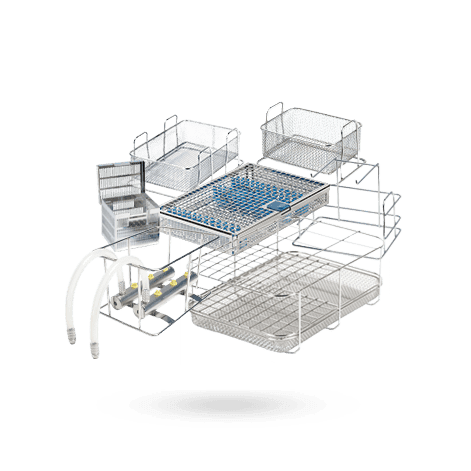
With over 80 specially-developed accessories, the practice-optimized treatment chamber of MELAtherm 10 and MELatherm 10 Evolution can be modified to meet the individual needs of medical and dental practices. The Flex-System even permits stacking of the insert baskets on two levels. This enables many practices and clinics to use MELAtherm 10 for up to 100 patients per day. Find out more about our solution for large practices and clinics at our References or in our fact check video of the loading capacity of the MELAG washer disinfector.
Washer disinfectors with a larger washing chamber are not only significantly slower and less cost efficient to run than their smaller counterparts, but are often loaded inefficiently in practice routine. To make the purchase that best fits your needs, we recommend that you work together with our sales rep to find the best load configuration for your MELAtherm washer disinfector. You can find the right contact partner in your country at International Sales. Our expert sales team will be happy to work with you to optimize your instrument decontamination workflow.
Cleaning and disinfection with a MELAG washer disinfector is the safest and most efficient way to decontaminate your valuable instruments. More than 15,000 medical and dental clinics worldwide benefit from the unique product highlights of MELAtherm 10 with active drying, integrated process agents and documentation interfaces.
In addition to the tried-and-tested product features, the new MELAG washer disinfector MELAtherm 10 Evolution convinces with innovations for even more efficient instrument reprocessing.
The AquaBoost Technology of MELAtherm 10 Evolution ensures up to 44 % better cleaning results through double rinsing pressure. The increased power also makes for the reprocessing of even more instruments: Decontaminate up to 23 hand pieces using the injector basket Flex 1 and further instruments for up to 40 patients per day.
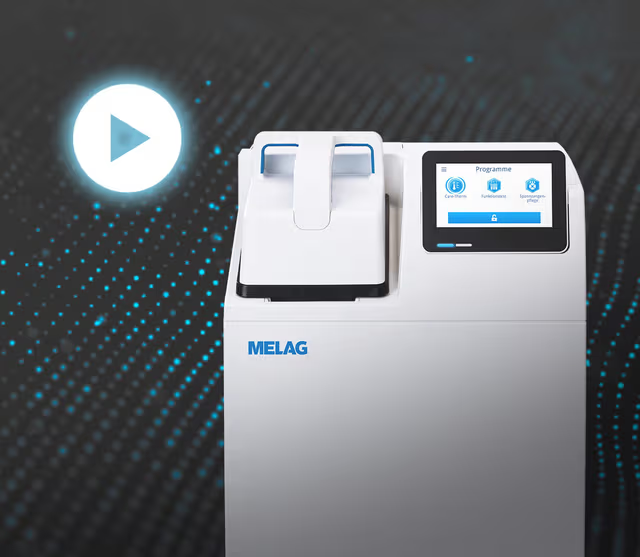
The large Smart-Touch Display facilitates the operation and program selection. For a maximum ease of use, issues regarding loading, program selection, the replacement of process agents and the like, can be resolved quickly and directly with video tutorials on the Smart-Touch Display. User authentication and batch approval can be performed in a fast and paperless way via ProControl. You can thus approve and immediately re-use non-surgical instruments after automatic cleaning and disinfection (please comply with your national standards).
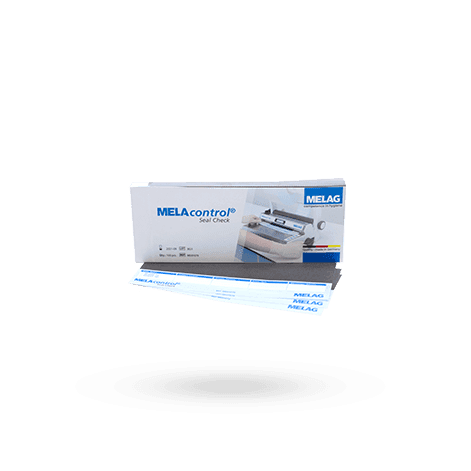
With the new MELAconnect App, you can tap into the full potential of MELAtherm 10 Evolution and the MELAG system solution. The device status and program progress can be monitored remotely on your smartphone and tablet at any time and from anywhere in your practice and clinic. The integrated Seal Check function, the Media Center and Troubleshooting Tool are additional features to help you benefit even more from smart workflows in instrument reprocessing.
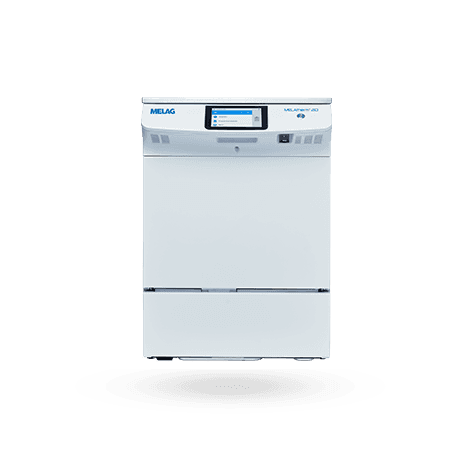
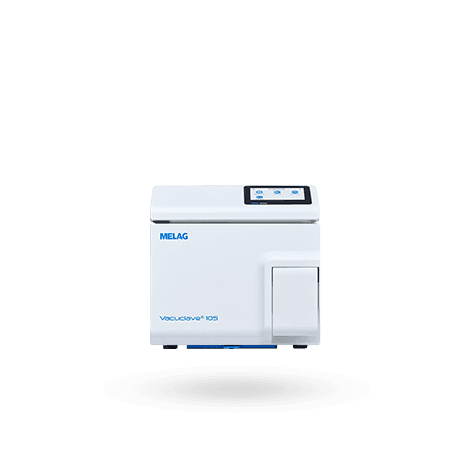
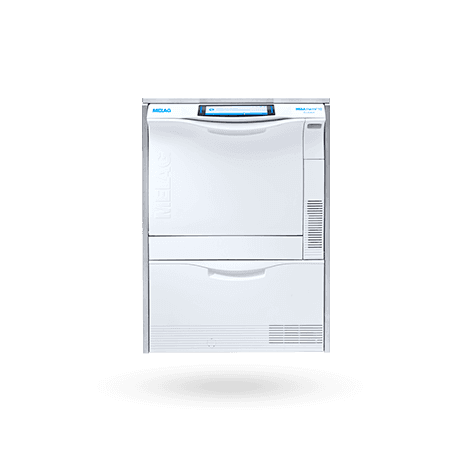
The compact device concept of MELAtherm 10 and MELatherm 10 Evolution makes for space-saving installation. The active drying, the metering module, the process agents and the documentation interfaces are already integrated in the device. This permits standard installation dimensions of width: 60 cm, height: 82 cm, depth: 60 cm. Thus, the MELAG thermal disinfectors conveniently fit in every cupboard.
Both washer disinfectors of the MELAtherm 10 Series are available in two versions: Connected to 400 v high-power current, the MELAtherm 10 DTA ensures very fast cycle times. If your practice or clinic is not fitted with a three-phase current connection, the MELAtherm 10 DTB presents an alternative for a 230 v socket. The entire reprocessing procedure (cleaning, disinfection and drying) with a DTB device in the 230 v version is extended by only 15 minutes.
A washer disinfector also requires a water connection. In contrast to the steam sterilizer, a washer disinfector can be operated using tap water. So the installation requires a feed water and a waste water connection.
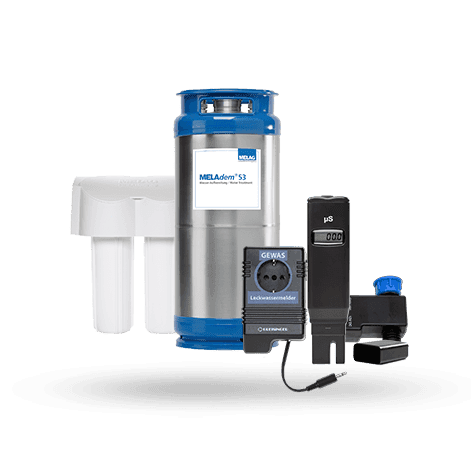
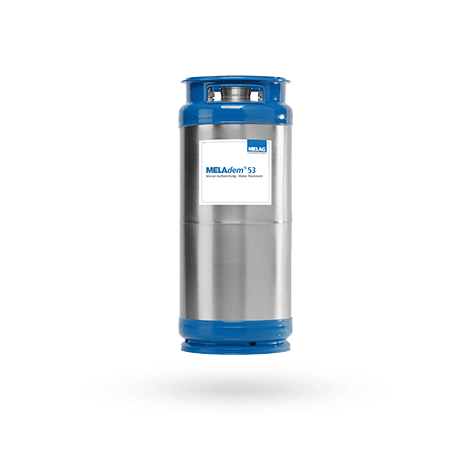
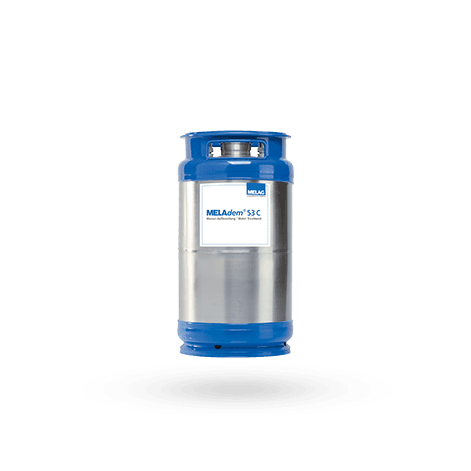
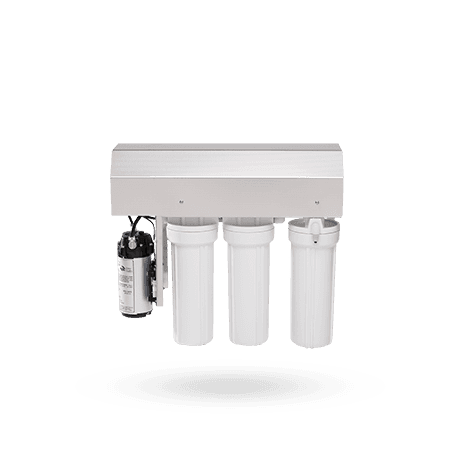
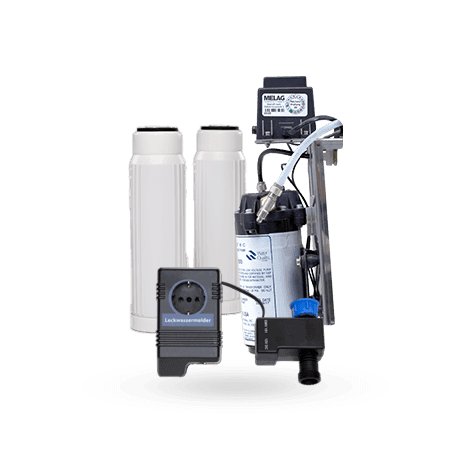
The additional MELAdem 53 water treatment unit guarantees significant process optimization. The demineralized water generated by MELAdem 53 is used for the important final rinse in the washer disinfector MELAtherm 10 and MELAtherm 10 Evolution. The final rinse with demineralized water ensures the protection and care of your instruments. This prevents stain development and alterations to the surface of the instruments resulting from strongly mineralized tap water. The high capacity of the MELAdem 53 ion exchanger supplies a washer disinfector and up to three additional devices with quality demineralized water in practice and clinic.
Semi-critical medical devices are instruments that come into contact only with mucous membranes or pathologically altered skin. The recommendation of the Commission for Hospital Hygiene and Infection Prevention (KRINKO) at the Robert Koch Institute (RKI) and the Federal Institute for Drugs and Medical Devices (BfArM) allows for the direct reuse of semi-critical instruments after they have been cleaned and thermally disinfected in a thermal disinfectant / RDG using validated processes.
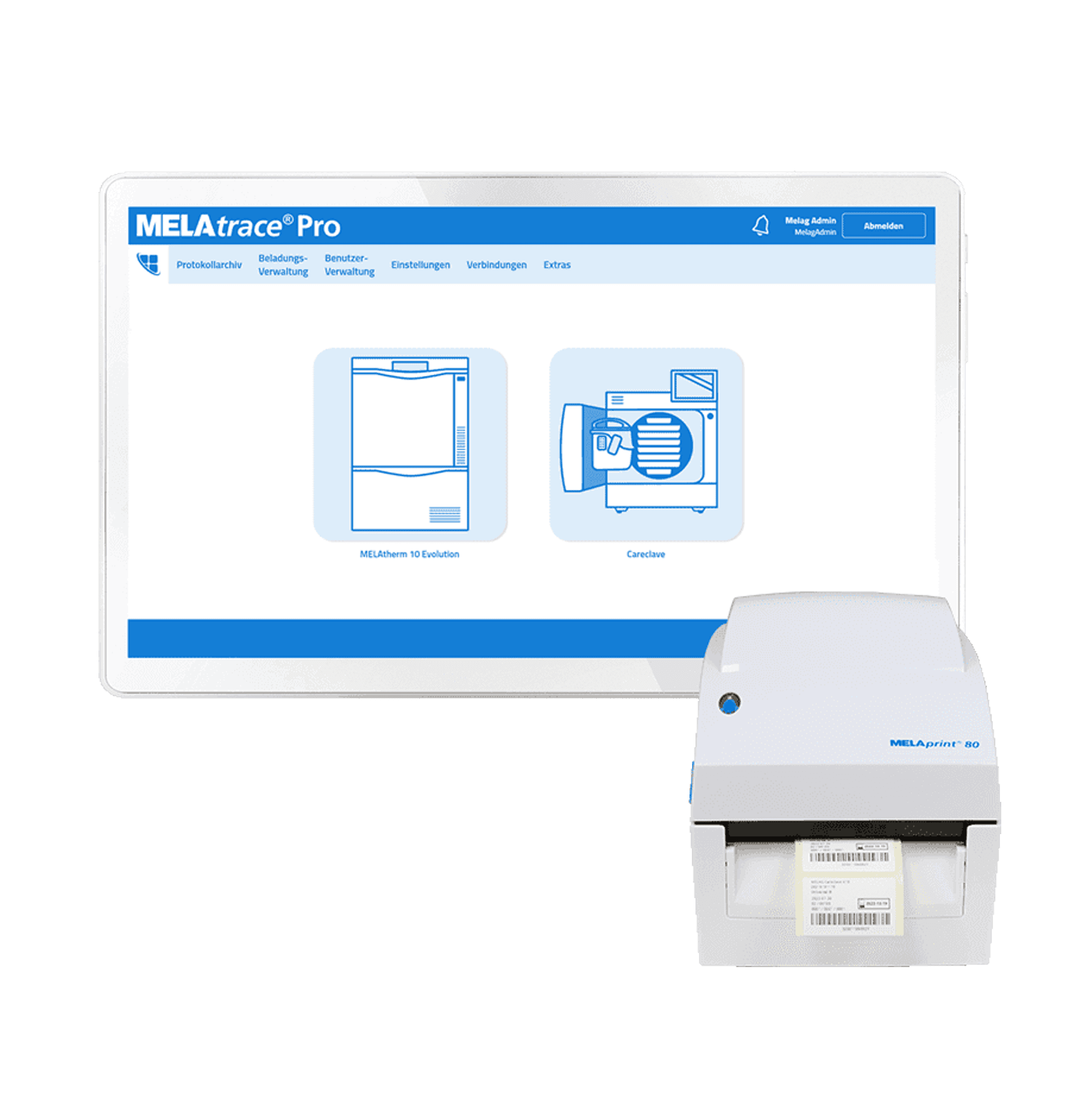
Please verify the semi-critical instruments through a visual and functional inspection. Subsequently, document the release using an appropriate form, either manually or by using release software, such as MELAtrace.
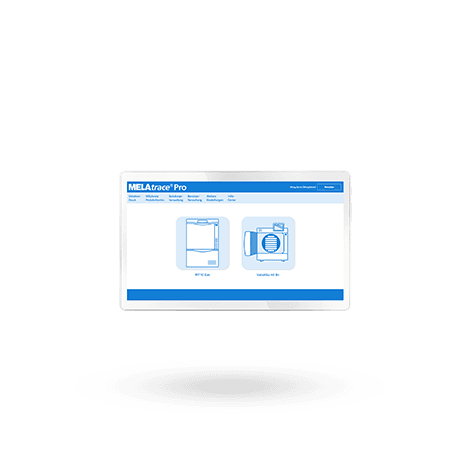
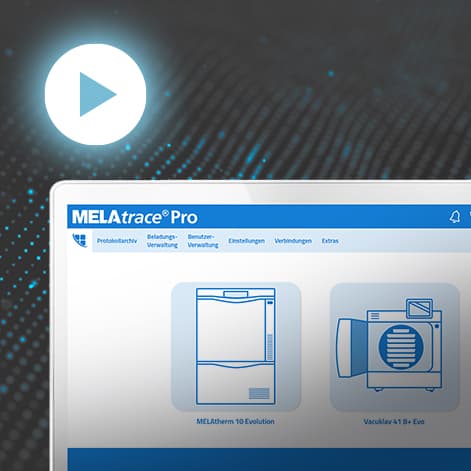
The documentation and release software MELAtrace meets all requirements: Many medical and dental practices greatly appreciate its intuitive user interface! The software can handle the processes of all MELAG devices used in your practice's reprocessing room without additional license or signature fees. It thus provides the fastest and simplest way for legally compliant documentation of the reprocessing process.
In addition to the regular maintenance performed by trained service technicians, you can also contribute to the quality assurance of your washer disinfector by routine checks.
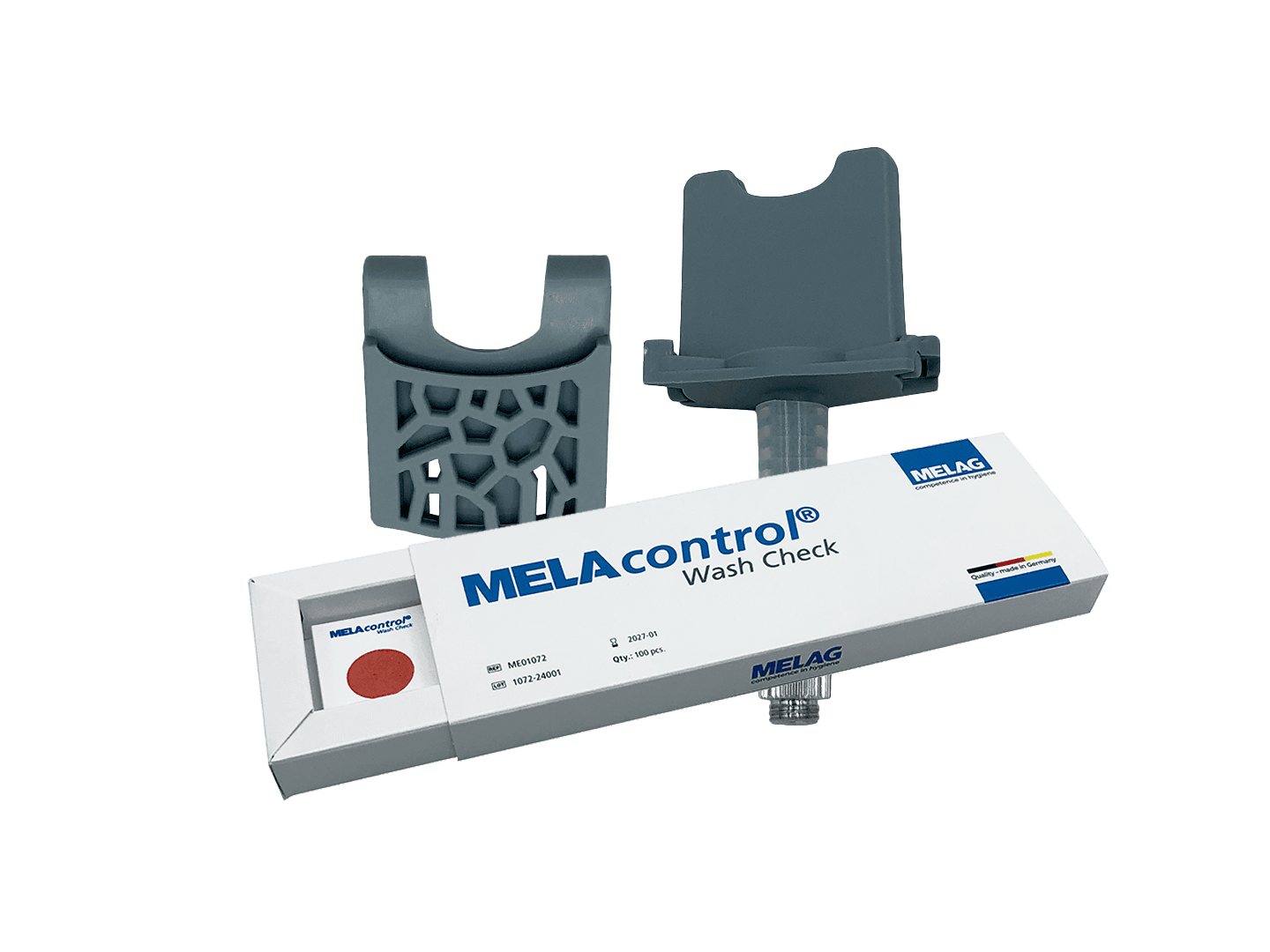
The daily inspection of the coarse and fine sieve in the washing chamber protects the water circulation of the washer disinfector against dirt particles or small parts. Please clean the sieves under running water with a brush to remove residue.
In addition to cleaning the sieves, we recommend visual inspection of the door seal, the rinse arms and the other accessories (e.g. baskets and racks). You can remove visible soiling on the front of the thermal disinfector with a suitable surface disinfectant such as MELAdes 700.
Automatic monitoring of the rinse pressure, rinse arm rotation and further process parameters of MELAtherm 10 and MELatherm 10 Evolution enable reproducible and proper cleaning and disinfection procedures.
The decontamination of hollow body instruments is assuming an ever-greater importance in practices and clinics.
Successful automatic decontamination of hollow bodies requires that instruments with narrow lumen are checked for blockages. Therefore, please flush the instruments with demineralized water after the treatment of patients. Reprocess only those hollow body instruments in a washer disinfector which guarantee sufficient and reproducible rinsing. Please comply with the instrument manufacturer's specifications.
Hollow body instruments must be connected to the injector rail of the basis basket. MELAG provides a range of adapters for accommodating hollow body instruments from various medical fields.
Dental practices and clinics typically use a wide range of complex hollow body instruments. Use our accessories for MELAtherm 10 washer disinfector to adapt ultrasonic scaler tips, handpieces and turbines. The Adapters in combination with the Injector basket Flex 1 ensure maximum safety and efficiency in decontaminating six ultrasonic scaler tips.
Surgical suction cannulas can be decontaminated using injector nozzles. Universal suction cannulas with a diameter of 11-16 mm can be placed in the instrument basket in an upright position. The adaptation of these instruments on the injector rail is not necessary.
For various medical purposes (for example in surgery, orthopaedics, urology etc.) predominantly instruments with standardized connectors are being used. The use of “male” and “female” Luer-Lock adapters connect these hollow body instruments securely with the injector rail. Non-standardized connections such as the working channel of an endoscope can be adapted using a rinse sleeve.
Irrespectively of the medical specialization, hollow body instruments with an inner diameter lower than 0.8 mm require a fine filter of the water. This filtration protects the instruments from damage. The MELAG system provides various solutions for filtration in a thermal disinfector: Depending on the requirements, a ceramic filter disc, a metal filter disc or a central filter can be used to perform the fine filtration.
The new MELAG Cleanfinity Filter provides the most economical and convenient solution for the safe cleaning and disinfection of hollow body instruments. With the innovative control indicator on the injector rail, the filter performance can be checked after every cycle. If the control pin does not protrude, the filter is to be cleaned under running water using the brush included in the scope of delivery. The Cleanfinity Filter as cleanable central filter does not cause any follow-on costs.
To ensure the best-possible cleaning result, please close any un-used connections on the injector rail. To do so, use the silicone closure caps included in the scope of delivery.
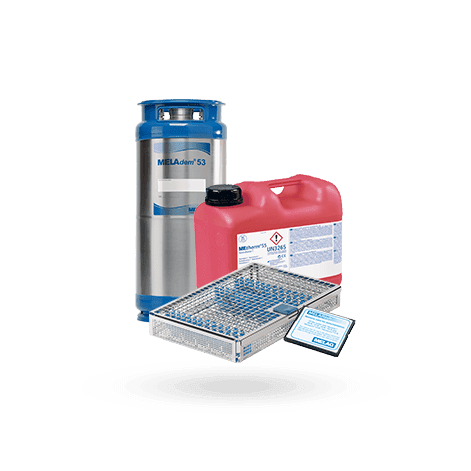
We recommend the MEtherm series process agents for automatic cleaning and disinfection with MELAtherm 10 and MELatherm 10 Evolution. The MELAG process agents were especially developed and tested to meet the requirements of the MELAtherm 10 series washer disinfectors. The combination of MELAtherm 10 and MELatherm 10 Evolution with the MEtherm series guarantees the best-possible cleaning outcome while ensuring minimum consumption.
The MEtherm series comprises the mildly-alkaline cleaning agent MEtherm 51; the citric acid-based neutralizer MEtherm 55; the phosphoric acid-based neutralizer MEtherm 56; and the rinse aid MEtherm 61. The MEtherm process agents have been optimally aligned to achieve the best cleaning and drying outcomes. Find out more about the advantages of our process agents.
MEtherm 51 is a high-performance, mildly-alkaline enzymatic cleaning agent for automatic instrument decontamination using MELAG thermal disinfectors. The especially-good cleaning performance of MEtherm 51 and the way in which it minimizes films on the instruments and the washing chamber ensure the long-term value-retention in a practice or clinic setting.
The citric acid-based neutralizer MEtherm 55 is suitable for very gentle neutralization after alkaline cleaning in MELAtherm 10 and MELatherm 10 Evolution. The material-friendly MEtherm 55 is used particularly for dental hand pieces and other special instruments used in ophthalmic and ophthalmic-surgical practices and clinics. The citric acid-based neutralizer prevents the development of deposits on instruments and the thermal disinfector, whilst optimizing the cleaning outcome.
The phosphoric acid-based neutralizer MEtherm 56 is especially effective in the decontamination of medical devices in gynaecological, ENT or surgical practices and clinics. MEtherm 56 acts reliably to dissolve acid-soluble deposits such as lime scale and works effectively to prevent the accretion of film on the instruments and the washer disinfector.
MEtherm 61 is a liquid rinse aid for use in automatic instrument decontamination with MELAG washer disinfectors. Using MEtherm 61 supports the stain-free drying of instruments in the washer disinfector. MEtherm 61 is pH neutral and is especially material-friendly.
Using the MELAG process agents ensures the long term value-retention of your instruments and improves the efficiency of instrument reprocessing with MELAtherm 10 and MELatherm 10 evolution. Profit from our complementary solutions for instrument decontamination! Further information is available under MEtherm process agents.
There are clear, internationally recognised standards and guidelines for washer-disinfectors and washer-disinfectors that define the requirements for design, function, process control and validation.
The central standard is EN ISO 15883, which contains relevant specifications in several parts:
EN ISO 15883-1: General requirements for washer-disinfectors, basic safety requirements and test methods.
EN ISO 15883-2: Specific requirements for WDs for surgical instruments, anaesthesia equipment, etc.
EN ISO 15883-5: Test and reference manuals that describe practical test methods for checking performance.
These standards specify how a washer-disinfector must be designed, which process parameters must be achieved, how cleaning and disinfection are tested and which documentation obligations apply.
In addition, the RKI/BfArM recommendations for the reprocessing of medical devices apply in Germany. They describe basic hygiene requirements, requirements for validation, personnel qualification, process monitoring and risk assessment. These recommendations are de facto binding for operators of WDs, as they are recognised as the state of the art and are used as the basis for inspections and audits.
In addition, the manufacturer's specifications are always binding. They define permissible load patterns, suitable cleaning agents and programmes as well as maintenance and inspection specifications. Deviations from this can impair the effectiveness of the process and jeopardise the validity of the entire reprocessing process.
The A0 value is a key figure for thermal disinfection and describes the disinfection performance as a function of temperature and contact time. It is used to make different temperature/time combinations comparable and to ensure that a defined hygiene standard is achieved.
In mathematical terms, the A0 value indicates the "germ-killing effect" of a thermal disinfection process. The higher the temperature or the longer the exposure time, the higher the achievable A0 value. It is therefore an objective measure of how effective the thermal disinfection step in the washer-disinfector is.
In practice, washer-disinfector programmes typically achieve A0 values of ≥ 3,000, depending on the risk class of the medical devices to be reprocessed and the specifications of the standards or manufacturers. Some programmes even work with significantly higher values if there are special hygiene requirements.
Manual pre-cleaning is useful in many cases, but it does not replace automated, validated main cleaning in the washer-disinfector. The aim of pre-cleaning is to remove coarse impurities immediately after use so that blood, tissue or secretions do not dry and impair subsequent automated reprocessing.
This includes above all
Immediate removal of coarse dirt, e.g. by wiping or careful pre-soaking.
Placing in moist holding systems or pre-soaking solutions to prevent drying.
Optional use of an ultrasonic bath, especially for complex instruments or internal structures.
However, the actual, standardised and validated main cleaning and disinfection is performed by the washer-disinfector (WD). Only the washer-disinfector offers a reproducible, documentable process with defined parameters for cleaning, rinsing, thermal disinfection and drying.
For automated reprocessing in the washer-disinfector, a coordinated combination of cleaning and rinsing chemicals is used to ensure effective, gentle and reproducible reprocessing. Depending on the instrument material, degree of soiling and water quality, alkaline or neutral detergents are used: Alkaline cleaners are particularly suitable for removing stubborn organic residues such as blood or tissue, while neutral cleaners are mainly used for sensitive materials. This is followed by a neutralising agent, which reliably removes the alkaline residues and thus minimises the risk of corrosion. Finally, a rinse aid or drying aid reduces the surface tension of the water, improves the drying of the instruments and prevents residues or stains.
These chemicals are dosed fully automatically and reproducibly in the washer-disinfector - either conductivity-controlled, where the device precisely adjusts the required detergent concentration based on the measured conductivity, or via volume or time dosing, where pumps add defined quantities. In addition, washer-disinfectors monitor the batch parameters, fill levels and dosing quantities to ensure that every reprocessing process runs under constant conditions. In this way, the harmonised chemistry and precise dosing ensure that cleaning and disinfection is carried out in accordance with standards, is effective and can be validated.
Correct loading of the washer-disinfector is crucial for effective and validatable cleaning and disinfection, especially in the case of complex or internal structures such as hollow instruments. As a general rule, the washer-disinfector is always loaded in accordance with the intended trolleys, baskets and instrument holders, as these ensure optimal positioning and water flow. The instruments must be loaded in such a way that the spray arms can rotate freely and all water paths are unobstructed; blocked nozzles or overlapping instruments lead to insufficient cleaning performance.
Selective reprocessing is especially important for hollow instruments such as cannulae, lumens, contra-angles or hand instruments. They must be connected directly to the rinsing system of the washer-disinfector via adapters or special connection systems so that the interior is actively washed and rinsed. This is the only way for the cleaning and disinfection medium to reliably reach the critical internal surfaces. For turbines, handpieces and contra-angle handpieces, special instrument holders or drive systems are required to allow standardised internal cleaning and drying according to the specifications of the device and instrument manufacturer.
Open instruments must be opened, disassembled parts must be disassembled and placed in such a way that all surfaces are accessible. Sharp or sensitive instruments require protective stands to prevent damage. Sieves, cassettes or trays must also be used in such a way that water can drain easily and no stagnant areas are created.
Drying and corrosion protection are essential steps in automated reprocessing, as even the smallest traces of moisture can lead to staining or long-term material damage. Modern washer-disinfectors are equipped with an active hot air drying system that directs air at a defined temperature and volume flow through the rinsing chamber and - if hollow instruments are connected - also through their interiors. This reliably dries surfaces and lumens so that no residual moisture remains. Water quality also plays a decisive role: softened or demineralised water in the rinsing process prevents limescale residues, stains and corrosive deposits on instruments and surfaces.
Specific care and lubrication is also required for straight and contra-angle handpieces, turbines and other rotating instruments, as the internal moving components could otherwise be damaged. Depending on the system, this maintenance is either carried out automatically in the washer-disinfector using integrated maintenance programmes or via a separate, validatable maintenance device that controls the amount of oil, exposure time and flow rate. The care programme effectively completes the corrosion protection and ensures the functionality of sensitive instruments.
For critical and semi-critical medical devices - i.e. instruments that come into contact with mucous membranes, skin or sterile areas of the body - automated reprocessing in the WD is the de facto standard.
These recommendations clearly state that automated cleaning and disinfection has priority over manual reprocessing, as it is the only way to ensure reproducible, verifiable and validatable processes. The use of a washer-disinfector is practically indispensable in order to comply with standards such as EN ISO 15883, particularly in the case of complex instruments, hollow bodies or a higher risk of infection.
Many authorities, hygiene specialists and QM systems interpret these requirements in such a way that the use of a washer-disinfector is mandatory in practice as soon as such instruments are used. Automated reprocessing is also often a prerequisite for inspections, audits or certifications.
Process documentation and traceability in the washer-disinfector is a central component of a standardised and safe reprocessing process. Modern devices automatically record all relevant batch parameters and store them in a digital log. This data typically includes the temperature curves, the A0 values, the chemical dosage, the programmes used, any error messages, the user identification and the release decision at the end of the cycle. This provides seamless proof that cleaning and disinfection has been carried out in compliance with standards and in a reproducible manner.
The logs can be transferred directly to a practice or hospital IT system, a reprocessing management system or special documentation software via interfaces such as USB, LAN or WLAN. This reduces manual documentation and increases data security. In addition, barcode or UDI systems are often used to uniquely identify individual instruments or sets and assign them to a specific batch. This creates a digital tracking system: from the used instrument to machine reprocessing, sterilisation and subsequent use on the patient.
Extended instrument tracking (set or individual instrument tracking) also makes it possible to map the entire life and usage history of an instrument - including maintenance cycles, repairs and usage documentation. The process documentation therefore not only fulfils the legal and normative requirements, but also creates maximum transparency, security and traceability for the entire reprocessing process.
The validation of a washer-disinfector comprises the IQ, OQ and PQ steps during commissioning: Firstly, the Installation Qualification (IQ) checks whether the device has been installed correctly and whether all technical requirements such as water quality, connections and dosing systems meet the specifications. The Operational Qualification (OQ) then confirms that the washer-disinfector works reliably within the defined parameters - for example with regard to temperature control, A0 values, chemical dosing and spray arm function. Finally, the Performance Qualification (PQ) checks under real loading conditions whether the cleaning and disinfection performance is actually effective and reproducible. This validation must be repeated regularly through requalification, typically annually or whenever technical changes, repairs or adjustments have been made to chemicals or load patterns.
In addition to validation, routine checks during daily operation are required to maintain process safety in the long term. These include protein and blood residue tests to ensure that organic residues have been completely removed. Equally important is the regular inspection of the spray arms, which must be free to move and free of deposits so that water and cleaning agents can reach all relevant surfaces. Sieve and filter units must also be cleaned or replaced regularly to ensure a constant rinsing performance. In addition, thermologger measurements are used to verify that the temperatures displayed in the appliance correspond to the actual temperatures and that thermal disinfection is carried out in accordance with standards.
Suitable water quality is essential for the safe and gentle operation of a washer-disinfector. Softened or demineralised (demineralised) water is generally fed into the system, depending on the specifications of the device and instrument manufacturer. Parameters such as conductivity, water hardness and chloride content are decisive, as they have a direct influence on cleaning performance, corrosion risks and staining.
Softened water is often used for pre-cleaning and main cleaning as it prevents limescale deposits in the appliance and on the instruments. Most manufacturers require deionised water for rinsing because it is virtually free of salts and minerals. This prevents stains, deposits and material damage - especially with sensitive, high-quality instruments or hollow instruments.
Adhering to the recommended water quality not only protects the instruments, but also the machine itself: Excessive hardness or high chloride levels can cause corrosion on stainless steel components, affect the spray arms or pipes and lead to expensive repairs in the long term.
Planning capacity, baskets and cycle times is crucial in order to integrate the washer-disinfector efficiently into the daily practice routine and avoid bottlenecks in instrument reprocessing. Firstly, the expected capacity utilisation over the entire working day should be considered - especially the peak times when many instruments are returned at the same time. The typical set size is crucial, i.e. how many instruments are required per treatment and how many sets need to be reprocessed in parallel. This determines how many baskets, adapters and trolleys are required in order to be able to work without waiting times.
The basket and loading configuration should be selected to match the range of instruments in the centre: Standard baskets for general instruments, special inserts for hollow instruments, handpieces or small parts and sufficient adapters for internal structures. If a practice is very busy or reprocesses many complex instruments, it may make sense to plan parallel devices or additional loading sets so that a washer-disinfector can be reloaded at the same time during reprocessing.
Depending on the device, programme and load, cycle times are typically between 30 and 60 minutes, plus the drying phase, which can take a further few minutes depending on the type of instrument and amount of water. With a full load or heavily soiled instruments, the programme duration is extended accordingly. For realistic capacity planning, you should therefore always calculate with the longest expected cycle time.
Not all materials are automatically suitable for washer-disinfectors - which is why the manufacturer's approval for each instrument is crucial. Many stainless steels, hard metals and numerous medical plastics are easily suitable for automated cleaning and thermal disinfection and are routinely reprocessed in the washer-disinfector. They withstand the typical temperatures, chemicals and flow conditions of a validated washer-disinfector process well.
Other materials, on the other hand, are only suitable to a limited extent or not at all. These include aluminium in particular, especially anodised or softer alloys, as these can corrode, discolour or lose their surface due to alkaline cleaning agents or high temperatures. Coated surfaces - such as non-stick coatings, black or coloured oxide layers or special paintwork - are also sensitive to chemicals and can become detached or damaged if they are not expressly approved for the washer-disinfector.
There are also temperature-sensitive components such as certain plastics, elastomers, adhesive bonds, optical elements or electrical or mechanical components of handpieces. These may only be machine-cleaned if the manufacturer expressly permits this and provides suitable holders or programmes.
A washer-disinfector requires regular, documented maintenance in order to work safely and in compliance with standards in the long term. One of the most important routine tasks is the cleaning of strainers and filters, as these collect dirt particles, biofilms and residues during operation. Clogged filters impair the water distribution and therefore the cleaning performance, which is why their maintenance is crucial. The chemical hoses and dosing lines should also be checked regularly for leaks, brittleness or deposits so that cleaning and neutralising agents can be supplied reliably and in the correct concentration.
The seals in the washer-disinfector - for example on the door, spray arms or pumps - are also subject to natural wear. Cracks or deformations can lead to leaks, pressure loss or faulty rinsing processes; it is therefore important to replace them in good time. The conductivity sensors and other measuring and temperature sensors must also be calibrated at regular intervals to ensure that chemical dosing, temperature control and process monitoring remain precise and validatable.
In addition to these ongoing measures, annual maintenance by the manufacturer or an authorised service technician is mandatory. This involves checking mechanical, electrical and hydraulic systems, replacing wearing parts, testing dosing units and assessing the function and safety of the entire appliance. All maintenance, repairs and calibrations must be fully documented as they form part of the quality and validation certificates.
An ultrasonic bath and a washer-disinfector fulfil different tasks in instrument reprocessing - and can complement but not replace each other.
An ultrasonic bath is primarily used for pre-cleaning, especially for structures that are difficult to access, joints, grooves or fine surfaces. Cavitation dissolves adhering dirt very effectively, but is no substitute for a validated cleaning and disinfection process. Ultrasonic baths offer neither thermal disinfection nor complete, reproducible process monitoring. They are also heavily dependent on loading, water changes, chemicals and run times, which limits process reliability.
A washer-disinfector, on the other hand, offers a fully automated, validatable and documentable process that performs cleaning, rinsing, thermal disinfection and drying in accordance with standards. It works with defined parameters, programmed A0 values, controlled chemical dosing and digital batch logging. This enables a washer-disinfector to achieve the consistent, verifiable reprocessing quality required by standards (EN ISO 15883) and regulatory authorities.