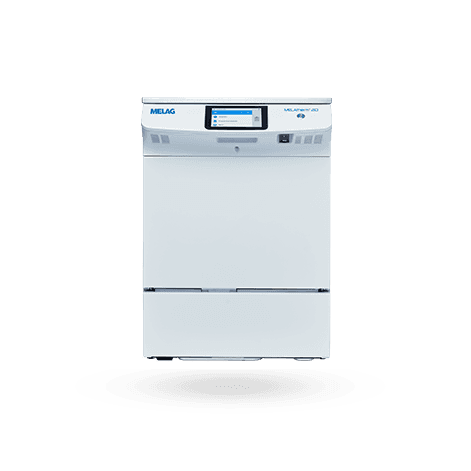
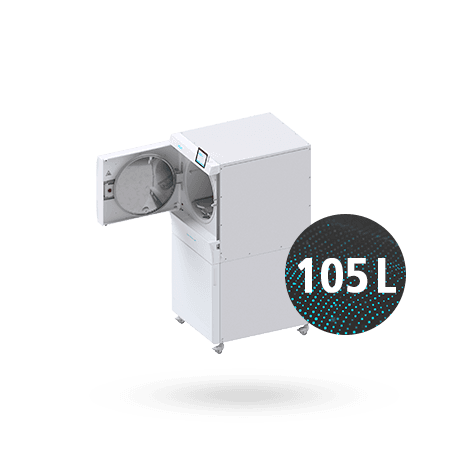
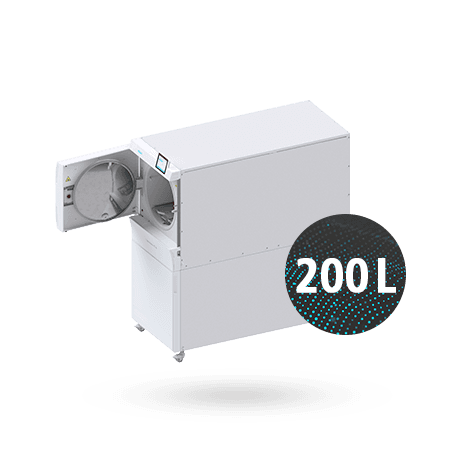
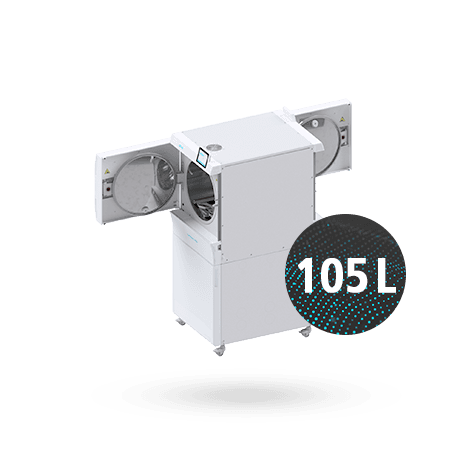
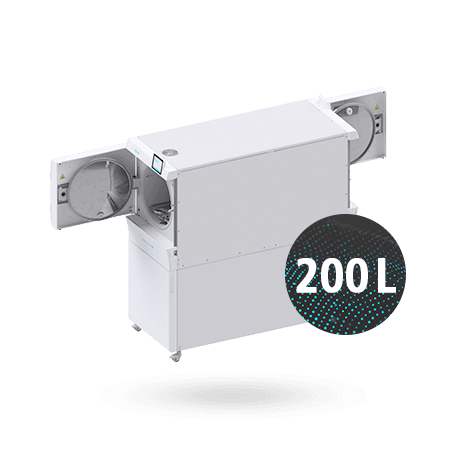
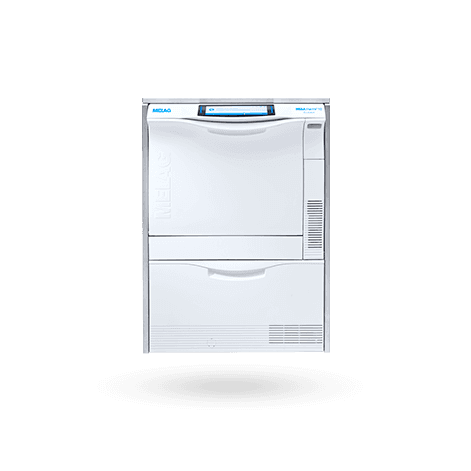
XXL Washer-Disinfector: Discover MELAtherm 20 >

Products Service Discover Contact
  • System Solution
  • Bestsellers Australia
  • Autoclaves
  • Large Autoclaves
  • Small autoclaves
  • MELAcare
  • Washer-Disinfectors
  • Ultrasonic cleaners
  • Sealing Devices
  • Packaging
  • Documentation
  • MELAverse
  • Care
  • Water Treatment
  • Routine Testing
  • Consumables
  • Bestsellers Australia
    Bestsellers Australia
  • Autoclaves
    Autoclaves
  • Large Autoclaves
    Large Autoclaves
  • Small autoclaves
    Small autoclaves
  • MELAcare
    MELAcare
  • Washer-Disinfectors
    Washer-Disinfectors
  • Ultrasonic cleaners
    Ultrasonic cleaners
  • Sealing Devices
    Sealing Devices
  • Packaging
    Packaging
  • Documentation
    Documentation
  • MELAverse
    MELAverse
  • Care
    Care
  • Water Treatment
    Water Treatment
  • Routine Testing
    Routine Testing
  • Consumables
    Consumables
Bestsellers Australia
  • Premium Class
    Premium Class
  • Prime Line (Class B)
    Prime Line (Class B)
  • Pro Line (Class B)
    Pro Line (Class B)
  • Pro Line (Class S)
    Pro Line (Class S)
  • Vacuclave 105 / 305
    Vacuclave 105 / 305
  • Vacuclave 550
    Vacuclave 550
  • Cliniclave 45 Series
    Cliniclave 45 Series
  • Vacuklav 24 BL+
    Vacuklav 24 BL+
  • Accessories & components for autoclaves
    Accessories & components for autoclaves
  • Cliniclave 45
    Cliniclave 45
  • Cliniclave 45 M
    Cliniclave 45 M
  • Cliniclave 45 D
    Cliniclave 45 D
  • Cliniclave 45 MD
    Cliniclave 45 MD
  • Vacuclave 550
    Vacuclave 550
  • Accessories & components for large autoclaves
    Accessories & components for large autoclaves
  • Vacuclave 105
    Vacuclave 105
  • Vacuclave 305
    Vacuclave 305
  • MELAcare
    MELAcare
  • MELAcare Lid Blue
    MELAcare Lid Blue
  • MELAcare Lid Green
    MELAcare Lid Green
  • Care Oil
    Care Oil
  • Accessories & components for MELAcare
    Accessories & components for MELAcare
  • MELAtherm 20
    MELAtherm 20
  • MELAtherm 10 Evolution
    MELAtherm 10 Evolution
  • Ultrasonic cleaners
    Ultrasonic cleaners
  • Loading patterns
    Loading patterns
  • Baskets & Adapters
    Baskets & Adapters
  • MELAcontrol Wash Check
    MELAcontrol Wash Check
  • Regenerating Salt
    Regenerating Salt
  • Accessories & components for thermal disinfectors
    Accessories & components for thermal disinfectors
Ultrasonic cleaners
Ultrasonic cleaners
  • MELAseal 300
    MELAseal 300
  • MELAseal 200
    MELAseal 200
  • MELAseal 100+
    MELAseal 100+
  • Routine Testing
    Routine Testing
  • Accessories & components for sealing devices
    Accessories & components for sealing devices
  • MELAstore Trays
    MELAstore Trays
  • MELAstore Tray Ophthalmology
    MELAstore Tray Ophthalmology
  • MELAstore Boxes
    MELAstore Boxes
  • MELAstore transport box
    MELAstore transport box
  • Accessories & components for sterile goods storage
    Accessories & components for sterile goods storage
  • MELAtrace
    MELAtrace
  • MELAverse
    MELAverse
  • MELAprint 80
    MELAprint 80
  • MELAprint 60
    MELAprint 60
  • MELAdoc
    MELAdoc
  • MELAflash
    MELAflash
  • MELAnet Box
    MELAnet Box
  • Accessories & components for documentation
    Accessories & components for documentation
MELAverse
MELAverse
  • Care Oil Spray
    Care Oil Spray
  • Chamber Protect
    Chamber Protect
  • MELAdem 40
    MELAdem 40
  • MELAdem 47
    MELAdem 47
  • MELAdem 53
    MELAdem 53
  • MELAdem 53 C
    MELAdem 53 C
  • MELAdem 56
    MELAdem 56
  • MELAjet
    MELAjet
  • Accessories & components for water treatment
    Accessories & components for water treatment
  • MELAcontrol Wash Check
    MELAcontrol Wash Check
  • MELAcontrol Seal Check
    MELAcontrol Seal Check
  • MELAcontrol Ink Test
    MELAcontrol Ink Test
Consumables
Consumables
  • MELAG Service World
  • Downloadcenter
  • Troubleshooting
  • Video Tutorials
  • Device Registration
  • Service Portal
  • Technical Training
  • Configurator
  • Downloadcenter
    Downloadcenter
  • Troubleshooting
    Troubleshooting
  • Video Tutorials
    Video Tutorials
  • Device Registration
    Device Registration
  • Service Portal
    Service Portal
  • Technical Training
    Technical Training
  • Configurator
    Configurator
Downloadcenter
Downloadcenter
Troubleshooting
Troubleshooting
  • MELAcare Tutorials
    MELAcare Tutorials
  • Careclave Tutorials
    Careclave Tutorials
  • Autoclaves Tutorials
    Autoclaves Tutorials
  • Washer-Disinfector Tutorials
    Washer-Disinfector Tutorials
  • MELAseal 200 Tutorials
    MELAseal 200 Tutorials
  • MELAseal 300 Tutorials
    MELAseal 300 Tutorials
  • MELAtrace Tutorials
    MELAtrace Tutorials
Device Registration
Device Registration
Service Portal
Service Portal
Technical Training
Technical Training
Configurator
Configurator
  • Promotions
    Promotions
  • Success Stories
    Success Stories
  • Inspiration & Tips
    Inspiration & Tips
  • News
    News
  • Family Business & Jobs
    Family Business & Jobs
Promotions
Promotions
Success Stories
Success Stories
Inspiration & Tips
Inspiration & Tips
News
News
Family Business & Jobs
  • Book a consultation: On-site, online or in a showroom
    Book a consultation: On-site, online or in a showroom
  • Your sales contacts
    Your sales contacts
  • Fairs & Congresses
    Fairs & Congresses
  • Contact form
    Contact form
  • Company & Apprenticeship
    Company & Apprenticeship
Book a consultation: On-site, online or in a showroom
Your sales contacts
Your sales contacts
Fairs & Congresses
Fairs & Congresses
Contact form
Contact form
Company & Apprenticeship
Free Webinar: For more hygiene, better instrument protection & clear workflows
Learn more
Identify errors, find solutions: Our Troubleshooting Portal for MELAG products
Start troubleshooting
Free Webinar: For more hygiene, better instrument protection & clear workflows
Learn more
Any questions? We have the answers! Our hygiene experts in Australia will be happy to advise you.
Contact us now
|
Specialties
  • Dental
  • Medical
  • Ophthalmo
  • Hospital
  • Veterinary
  • Podiatry
  • University
Select language and country

Newsletter Subscription

Register for our newsletter and always stay up to date.

Products
  • Instrument Reprocessing
  • Autoclaves
  • Washer-Disinfectors
  • Ultrasonic cleaners
  • Sealing Devices
Service
  • Downloads
  • Troubleshooting
  • Video Tutorials
  • Blog
Company
  • We are MELAG
  • Sustainability
  • History
  • News
  • Contact
  • Instrument Reprocessing
  • Autoclaves
  • Washer-Disinfectors
  • Ultrasonic cleaners
  • Sealing Devices
  • Downloads
  • Troubleshooting
  • Video Tutorials
  • Blog
  • We are MELAG
  • Sustainability
  • History
  • News
  • Contact
  • Imprint
  • Terms and Conditions
  • Privacy
  • Whistleblower
  • Open Cookie Settings

© MELAG Medizintechnik GmbH & Co. KG

Placeholder for alt text

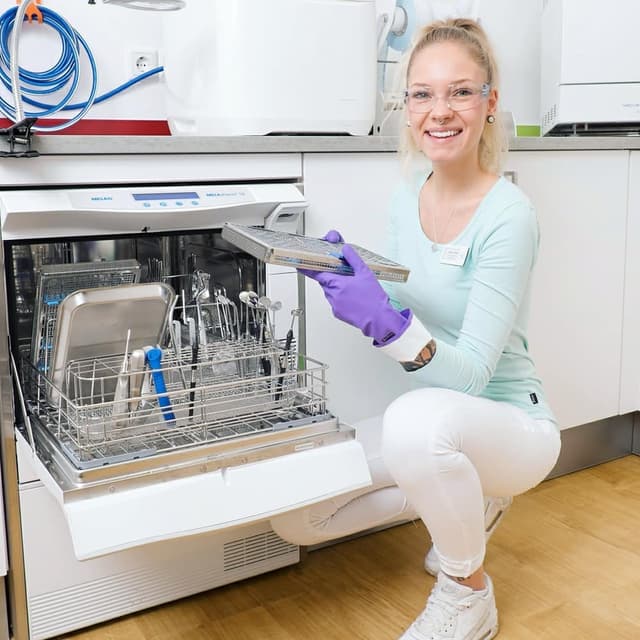
Cleaning and disinfection with a washer disinfector in a veterinary practice

Discover MELAtherm
Download our washer-disinfectior guide

Cleaning and disinfection device in a veterinary practice

The hygienic reprocessing of instruments plays a crucial role in the modern veterinary practice. Automated cleaning and disinfection with a thermal disinfector offers an effective and standardized method to meet the requirements for cleanliness and safety. In addition to preserving the value of the instruments, it is a fundamental prerequisite for successful sterilization. In this article, you will learn why it makes sense to use a washer-disinfector, how the process works and what you should pay attention to when using it.

Collage-hochkant Thermo
Summary

Thermal Disinfectors for Sterilization in Veterinary Practices

Thermal disinfectors help veterinary practices ensure safe, efficient, and standardized instrument reprocessing—from loading to documented process control:

  • Automated cleaning and disinfection: Thermal disinfectors enable standardized machine-based reprocessing and provide an essential prerequisite for subsequent sterilization.

  • Greater safety and efficiency: Automated processes reduce manual effort and direct contact with contaminated instruments, thereby lowering the risk of needle stick injuries.

  • Instrument-friendly reprocessing: Coordinated cleaning, disinfection, and drying processes help preserve the value of the instruments and ensure they are quickly available for use.

  • Proper Loading: Proper positioning prevents cleaning blind spots; hollow instruments require appropriate adapters for reliable internal cleaning and disinfection.

  • Consistent process reliability: Regular maintenance, documented process parameters, and trained staff ensure reproducible reprocessing results.

Discover MELAtherm 20

Publication Date: January 22, 2026

Schedule an appointment now
Siegfried Kontaktbild

Author: Siegfried Weinhart

The advantages of a thermal disinfector in the veterinary practice

The use of a thermal disinfector offers numerous advantages that make everyday work in the practice considerably easier and at the same time increase safety.

1. time saving and efficiency

The washer-disinfector enables fast and automated cleaning and disinfection of instruments. In contrast to manual reprocessing, which can be time-consuming and laborious, the device saves valuable working time. The practice team can therefore concentrate more on treating the animals.

2. standardized processes

By using a thermal disinfector, instruments are always reprocessed according to the same programs and under consistent conditions. This ensures consistently high quality, regardless of different operators or other influencing factors.

3. safety of the practice team

The protection of staff is the top priority. As the washer-disinfector minimizes direct contact with contaminated instruments, the risk of puncture injuries, which often occur during manual cleaning, is significantly reduced.

4. preserving the value of the instruments

Gentle cleaning without aggressive disinfectants helps to keep instruments in good condition for longer. This leads to cost savings, as fewer replacements are necessary.

5. cost savings

Although the purchase of a washer-disinfector is an investment, there are considerable savings in the long term. With a washer disinfector, instruments can be cleaned and disinfected efficiently and cost-effectively. The low cycle costs for electricity, water and process media are around € 2.00 for MELAG products. This means that the purchase of a washer-disinfector pays for itself after around 25 months compared to manual cleaning and disinfection, which is more labor-intensive.

Enable YouTube content

To play this video, please allow cookies and other external services from YouTube.

The process sequence: cleaning, disinfection and drying

Thermal disinfectors work with thermal processes in which hot water is used for disinfection. The entire process can be divided into several steps that ensure thorough reprocessing of the instruments.

1. pre-rinsing

In the first phase, coarse impurities and proteins are removed with cold water. This prevents proteins from becoming fixed to the instruments.

2. cleaning

Cleaning takes place at temperatures of 40 to 60 degrees Celsius over a period of at least five minutes. Alkaline cleaning agents adapted to the nature of the instruments are used.

3. neutralization

After cleaning, neutralization takes place to balance out the alkalinity of the cleaning agents. This removes cleaning agent residues and maximizes the cleaning result.

4. thermal disinfection

Thermal disinfection takes place at temperatures of 80 to 95 degrees Celsius. This high temperature ensures that all microorganisms are killed and no impurities are left behind.

5. drying

Drying the instruments is the final step. It can be carried out either by the washer-disinfector itself or by other means. Active drying in the appliance ensures that the instruments are hand-warm and dry after cleaning.

Enable YouTube content

To play this video, please allow cookies and other external services from YouTube.

@MELAG_ANZ

Become part of the MELAG family on Instagram.

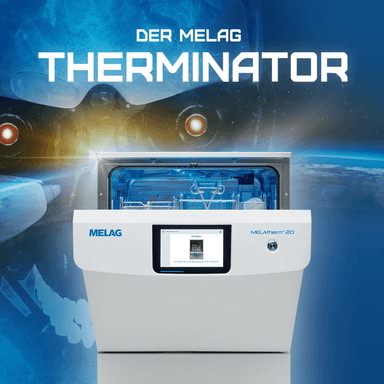
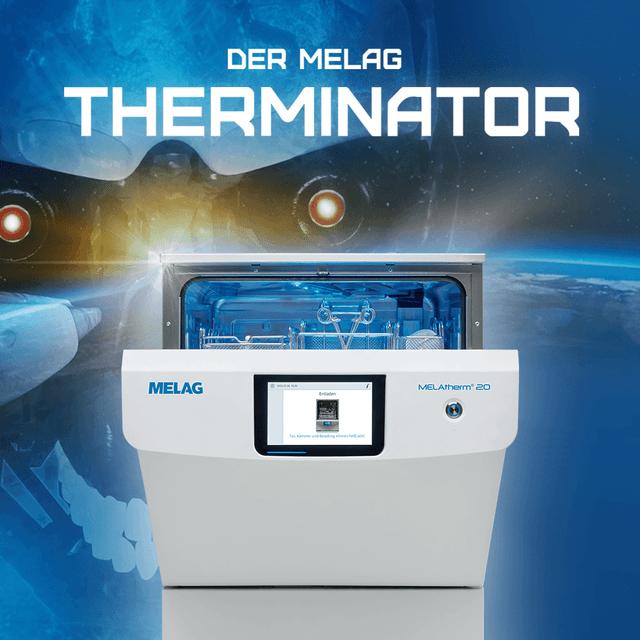
Therminator
LIKE A BOSS MELAConnect INSTA.00 00 21 17.Still002
James Blond
242659556 1078731822897268 6204022075826677963 n
melag_anz
melag_anz
Therminator
LIKE A BOSS MELAConnect INSTA.00 00 21 17.Still002
James Blond
242659556 1078731822897268 6204022075826677963 n
La Casa
164138715 3507874006103570 311456217807659774 n
149845491 437586424027695 5214298580294819893 n
83934906 143956850408991 6347510830148386435 n
Therminator

2789 views

The MELAG THERMINATOR: As powerful as Schwarzenegger in his prime! 🤖 The innovation from the future against viruses and germs.
Subscribe now
La Casa
164138715 3507874006103570 311456217807659774 n
149845491 437586424027695 5214298580294819893 n
83934906 143956850408991 6347510830148386435 n

Tips for the optimal use of a thermal disinfector

In order to use the washer-disinfector efficiently and achieve the best possible results, some important instructions should be observed:

  • Suitable instruments

    Only instruments that have been approved for automated cleaning may be reprocessed in the washer-disinfector.

  • Correct pre-treatment

    Instruments should be collected after treatment without solution and water. Pre-cleaning with plastic brushes or ultrasonic devices is recommended for stubborn soiling.

  • Avoiding rinsing shadows

    When loading the washer-disinfector, care must be taken to ensure that all surfaces of the instruments can be completely cleaned.

  • Drying

    Integrated drying is preferable in order to dry the instruments quickly and safely.

  • Pre-cleaning with suitable tools: Stubborn soiling on instruments should preferably be cleaned with plastic brushes. In addition, an ultrasonic device can be used to remove heavily dried soiling.

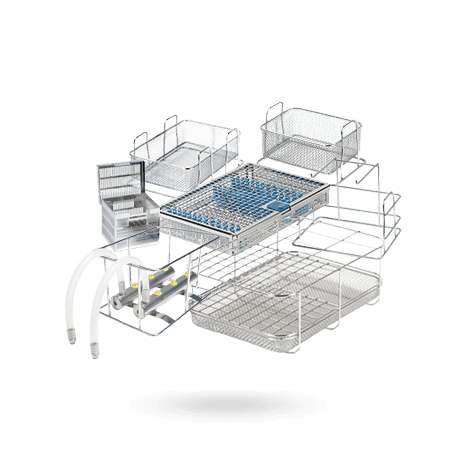
  • Correct positioning of hollow instruments: Use appropriate adapters on the injector rail to also clean and disinfect the inside of hollow-body instruments such as turbines or endoscopes.

  • Maintenance and care of the device: Regular maintenance of the washer-disinfector is essential to ensure its proper functioning and long service life. Clean the filters regularly and carry out the prescribed disinfection cycles.

  • Documentation of the process parameters: Check whether the washer-disinfector has an integrated documentation function to record all relevant process parameters and ensure reproducible results.

  • Regular training for the team: Ensure that all team members who operate the washer-disinfector receive regular training to avoid errors and maximize the efficiency of the device.

Conclusion: Efficiency and safety with thermal disinfectors

A thermal disinfector offers numerous advantages in veterinary practices, from increasing efficiency and reducing costs to protecting the health of patients and the practice team. Investing in this technology pays off in the long term and makes a decisive contribution to quality assurance in the practice.

For further information and advice on the use of thermal disinfectors, please do not hesitate to contact us. Our team is at your side with professional expertise!